
Many drivers know their vehicle needs antifreeze, but they are not always sure where to put antifreeze when coolant levels get low. Adding it to the wrong location can create problems, while adding it correctly helps protect your engine from overheating and freezing temperatures.
The good news is that finding the right place is usually simple. This guide explains exactly where to put antifreeze, how to do it safely, and the common mistakes you should avoid.
Where to Put Antifreeze in a Car
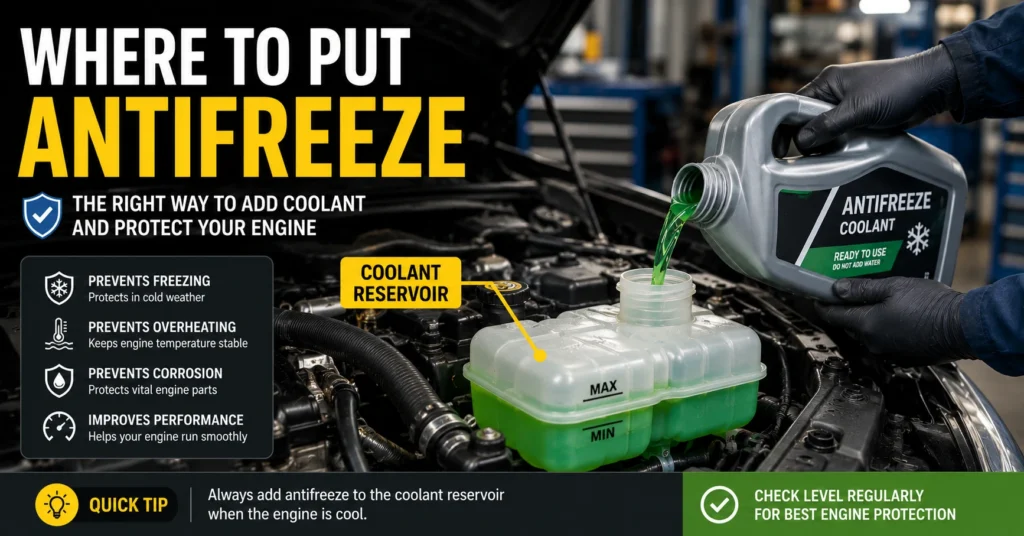
In most modern vehicles, antifreeze should be added to the coolant reservoir tank, sometimes called the overflow tank.
This tank is typically made of translucent plastic and has markings showing the minimum and maximum coolant levels. It is usually located near the radiator in the engine compartment.
Before opening the tank:
- Turn off the engine.
- Allow the engine to cool completely.
- Check the coolant level against the markings.
- Add the correct antifreeze mixture if the level is low.
Never remove the radiator cap while the engine is hot. Hot coolant can cause serious burns.
How to Find the Coolant Reservoir
If you’re wondering where to put antifreeze, locating the coolant reservoir is the first step.
Look for:
- A plastic tank connected to the radiator
- A cap labeled “Coolant” or “Engine Coolant”
- Minimum and maximum level markings
- Colored coolant visible inside the tank
Your owner’s manual can also help identify the exact location for your vehicle.
For more maintenance tips, see our guide on How to Check Car Fluids and How to Check Oil Level in Car.
Can You Put Antifreeze Directly Into the Radiator?
Yes, but only in certain situations.
Older vehicles may require coolant to be added directly to the radiator. In that case:
- Ensure the engine is completely cool.
- Remove the radiator cap carefully.
- Fill the radiator to the recommended level.
- Replace the cap securely.
Most newer cars are designed to receive antifreeze through the coolant reservoir, making the process safer and easier.
Choosing the Right Antifreeze
Not all antifreeze products are the same.
Vehicle manufacturers often recommend specific coolant formulas. Using the wrong type can reduce cooling system performance or even damage components.
Before adding coolant:
- Check your owner’s manual.
- Verify the recommended coolant type.
- Avoid mixing different coolant colors unless approved by the manufacturer.
If your vehicle has additional performance issues, you may also find these guides helpful:
Common Mistakes to Avoid
Many cooling system problems happen because of simple mistakes.
Adding Coolant to the Wrong Reservoir
Do not confuse the coolant reservoir with:
- Windshield washer fluid tank
- Brake fluid reservoir
- Power steering fluid reservoir
Always confirm the label before adding antifreeze.
Opening the System While Hot
A hot cooling system is under pressure. Opening it too soon can release boiling coolant.
Overfilling the Reservoir
Fill only to the maximum line. Excess coolant may overflow when the engine heats up.
Using Plain Water Long-Term
Water can be used temporarily in emergencies, but antifreeze provides:
- Freeze protection
- Corrosion prevention
- Better temperature control
Signs Your Car May Need Antifreeze
Low coolant levels often produce warning signs.
Watch for:
- Engine temperature running higher than normal
- Coolant warning light
- Visible coolant leaks
- Sweet smell from the engine bay
- Low coolant level in the reservoir
If these symptoms continue after adding coolant, have the vehicle inspected by a qualified mechanic.
If you want additional vehicle maintenance and safety recommendations, the National Highway Traffic Safety Administration (NHTSA) provides helpful resources on vehicle care and safety. You can also find seasonal maintenance tips through AAA Car Care Resources.
Frequently Asked Questions
Where exactly do I put antifreeze?
In most vehicles, antifreeze should be added to the coolant reservoir tank when the engine is cool.
Can I add antifreeze when the engine is hot?
No. Always wait for the engine to cool completely before opening the cooling system.
Is coolant the same as antifreeze?
Antifreeze is the concentrated liquid, while coolant is typically antifreeze mixed with water. Many products come pre-mixed and ready to use.
What happens if I put antifreeze in the wrong tank?
Adding antifreeze to the wrong reservoir can damage vehicle systems and may require professional cleaning or repairs.
Conclusion
Knowing where to put antifreeze is an important part of basic vehicle maintenance. In most modern cars, the correct location is the coolant reservoir tank, not necessarily the radiator itself. Always work with a cool engine, use the manufacturer-recommended coolant, and avoid overfilling.
A few minutes spent checking coolant levels can help prevent overheating, expensive repairs, and unexpected breakdowns. By following the simple steps in this guide, you can keep your cooling system working efficiently and your engine protected throughout the year.

