
Most drivers wait until a warning light appears before thinking about vehicle maintenance. Unfortunately, by then, the damage may already be expensive.
Learning how to check car fluids is one of the easiest ways to keep your vehicle reliable, safe, and fuel-efficient. A quick five-minute inspection can help you spot leaks, prevent overheating, improve braking performance, and extend engine life.
The good news is you do not need to be a mechanic to do it correctly.
This guide explains exactly how to check car fluids safely and correctly step by step. what healthy fluid should look like, and the warning signs you should never ignore.
What Are Car Fluids and Why Are They Important?
Car fluids are liquids that help different systems inside your vehicle operate safely and efficiently.
Without proper fluid levels, your car can suffer from:
- Engine overheating
- Brake failure
- Poor steering response
- Transmission damage
- Increased engine wear
- Expensive repair bills
Most modern vehicles rely on six essential fluids:
- Engine oil
- Coolant/antifreeze
- Brake fluid
- Transmission fluid
- Power steering fluid
- Windshield washer fluid
Checking them regularly helps you catch small problems before they turn into major mechanical failures.
Quick Answer: How Often Should You Check Car Fluids?
Most experts recommend checking essential car fluids at least once a month and before long road trips.
However:
- Engine oil should be checked every few weeks
- Coolant should be inspected monthly
- Brake fluid should be checked every 2–3 months
- Transmission fluid intervals depend on the manufacturer
Always consult your owner’s manual for your specific vehicle.
how to check car fluids
Before you begin, park your vehicle on a level surface and allow the engine to cool if necessary.
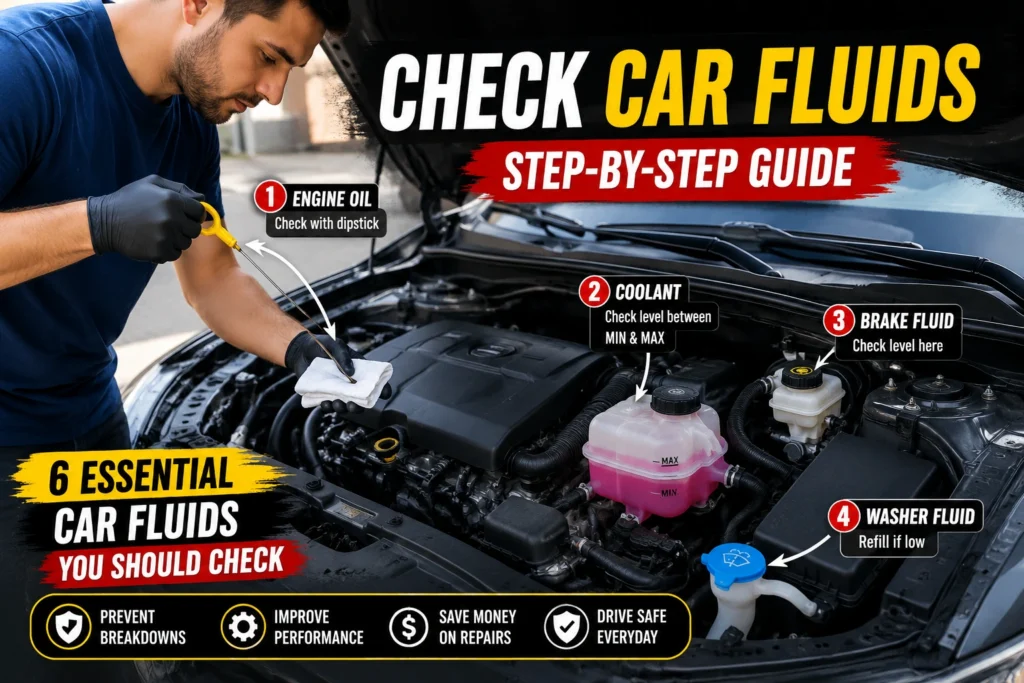
Step 1: Check Engine Oil
Engine oil lubricates internal engine parts and prevents overheating.
To check it:
- Open the hood and locate the oil dipstick
- Pull it out and wipe it clean
- Reinsert it fully
- Pull it out again and inspect the oil level
The oil should sit between the minimum and maximum marks.
Healthy oil usually appears:
- Amber or light brown in gasoline vehicles
- Slightly darker in diesel engines
If the oil looks gritty, extremely dark, or smells burnt, it may be time for an oil change. For Detailed inspection read our blog on
Signs Your Engine Oil May Be Low
- Engine ticking noises
- Oil warning light
- Burning smell
- Reduced fuel efficiency
Step 2: Check Coolant Level
Coolant helps regulate engine temperature and prevents freezing or overheating.
Locate the coolant reservoir, usually a transparent plastic tank near the radiator.
Important: Never open the radiator cap while the engine is hot.
Check that the coolant level sits between the “MIN” and “MAX” marks.
Healthy coolant may appear:
- Green
- Orange
- Pink
- Yellow
The exact color depends on the coolant type.
Warning Signs of Coolant Problems
- Engine overheating
- Sweet smell from engine bay
- Steam under hood
- Low coolant repeatedly
A consistently low coolant level may indicate a leak.
Step 3: Inspect Brake Fluid
Brake fluid transfers pressure through the braking system.
Low or contaminated brake fluid can reduce stopping power and create safety risks.
Locate the brake fluid reservoir near the firewall on the driver’s side.
You should see fluid between the minimum and maximum indicators.
Healthy brake fluid usually looks:
- Clear
- Light yellow
- Slightly amber
If it appears dark brown or dirty, it may need replacement.
Symptoms of Low Brake Fluid
- Soft brake pedal
- ABS warning light
- Longer stopping distance
- Grinding noises
Ignoring brake fluid issues can become dangerous very quickly.
Step 4: Check Transmission Fluid
Not all modern vehicles include a transmission dipstick, but many older automatic vehicles still do.
If your car has one:
- Start the engine
- Shift through all gears
- Park the car
- Pull out the transmission dipstick
Transmission fluid should typically appear:
- Pinkish-red
- Transparent
- Smooth
If it smells burnt or appears dark brown, the transmission may need service.
Common Transmission Fluid Warning Signs
- Delayed shifting
- Slipping gears
- Jerking movements
- Transmission overheating
Transmission repairs are expensive, so early fluid checks matter.
Step 5: Inspect Power Steering Fluid
Power steering fluid helps make steering smooth and responsive.
Some modern vehicles use electric steering and may not require fluid.
If your vehicle has hydraulic power steering:
- Locate the reservoir
- Check the level indicators
- Inspect fluid color
Healthy fluid is usually:
- Light red
- Amber
- Clear pink
Low fluid may cause:
- Steering stiffness
- Whining noises
- Vibrations while turning
Step 6: Refill Windshield Washer Fluid
This is one of the simplest but most overlooked fluids.
Windshield washer fluid improves visibility during:
- Rain
- Dust storms
- Snow
- Insect buildup
Locate the washer fluid reservoir cap, usually marked with a windshield icon.
Fill carefully without overfilling.
Avoid using plain water in colder climates because it may freeze.
The Most Common Mistakes People Make When Checking Car Fluids
Many online guides skip these important beginner mistakes.
Checking Fluids on an Uneven Surface
This can produce inaccurate readings, especially for engine oil.
Opening the Radiator While Hot
Hot coolant can spray out under pressure and cause serious burns.
Mixing Different Coolant Types
Different coolant formulas may not be compatible.
Ignoring Fluid Color
Fluid condition matters just as much as fluid level.
Overfilling Fluids
Too much fluid can damage seals and create pressure issues.
What Healthy Car Fluids Should Look Like
| Fluid | Healthy Color | Bad Signs |
|---|---|---|
| Engine Oil | Amber/light brown | Thick black sludge |
| Coolant | Green/orange/pink | Rusty or cloudy |
| Brake Fluid | Clear/light yellow | Dark brown |
| Transmission Fluid | Pink/red | Burnt smell or dark |
| Power Steering Fluid | Light red/amber | Foamy or black |
| Washer Fluid | Blue or clear | Dirt contamination |
This quick comparison helps identify issues before they become serious.
Signs Your Car May Have a Fluid Leak
Fluid leaks are one of the most overlooked vehicle problems.
Watch for:
- Puddles under the car
- Burning smells
- Dashboard warning lights
- Low fluid repeatedly
- Smoke from engine bay
- Poor vehicle performance
Different leak colors may indicate different problems:
- Green/orange: coolant
- Brown/black: engine oil
- Red/pink: transmission fluid
- Clear: water condensation or washer fluid
Seasonal Car Fluid Tips Most Drivers Ignore
Many competitors fail to explain how weather affects vehicle fluids.
Winter Tips
- Use winter-grade windshield washer fluid
- Monitor antifreeze protection
- Check battery-related fluid systems
Summer Tips
- Watch coolant levels carefully
- Inspect for overheating symptoms
- Check oil more frequently during long drives
Extreme temperatures place extra stress on fluid systems.
Should You Top Off or Replace Car Fluids?
This depends on the condition of the fluid.
You Can Usually Top Off:
- Windshield washer fluid
- Slightly low coolant
- Minor oil loss between service intervals
You May Need Full Replacement If:
- Fluid appears dirty
- Fluid smells burnt
- Manufacturer maintenance interval is reached
- Moisture contamination exists
Replacing contaminated fluid is often cheaper than repairing damaged components.
FAQ About How to Check Car Fluids
Can I check car fluids myself?
Yes. Most basic fluid checks are simple and beginner-friendly. You only need a few minutes and your owner’s manual.
Should the engine be hot or cold?
It depends on the fluid:
- Engine oil is often checked warm
- Coolant should be checked cold
- Transmission fluid may require the engine running
Always follow manufacturer instructions.
How long does a full fluid inspection take?
A complete check usually takes 10–15 minutes.
What happens if car fluids are low?
Low fluids can cause overheating, poor braking, transmission failure, engine wear, and steering problems.
Which car fluid is most important?
Engine oil and brake fluid are among the most critical because they directly affect engine protection and safety.
Why is it important to learn how to check car fluids?
Learning how to check car fluids helps prevent breakdowns, improves safety, and reduces expensive repair costs.
Final Thoughts
Knowing how to check car fluids is one of the simplest ways to protect your vehicle and avoid costly repairs.
Regular fluid inspections help you:
- Catch leaks early
- Improve vehicle reliability
- Extend engine life
- Maintain safe driving performance
- Reduce unexpected breakdowns
Even if you are not a car expert, spending a few minutes checking your fluids each month can save hundreds or even thousands of dollars later.
Start with the basics, follow your owner’s manual, and make fluid checks part of your normal maintenance routine.

