
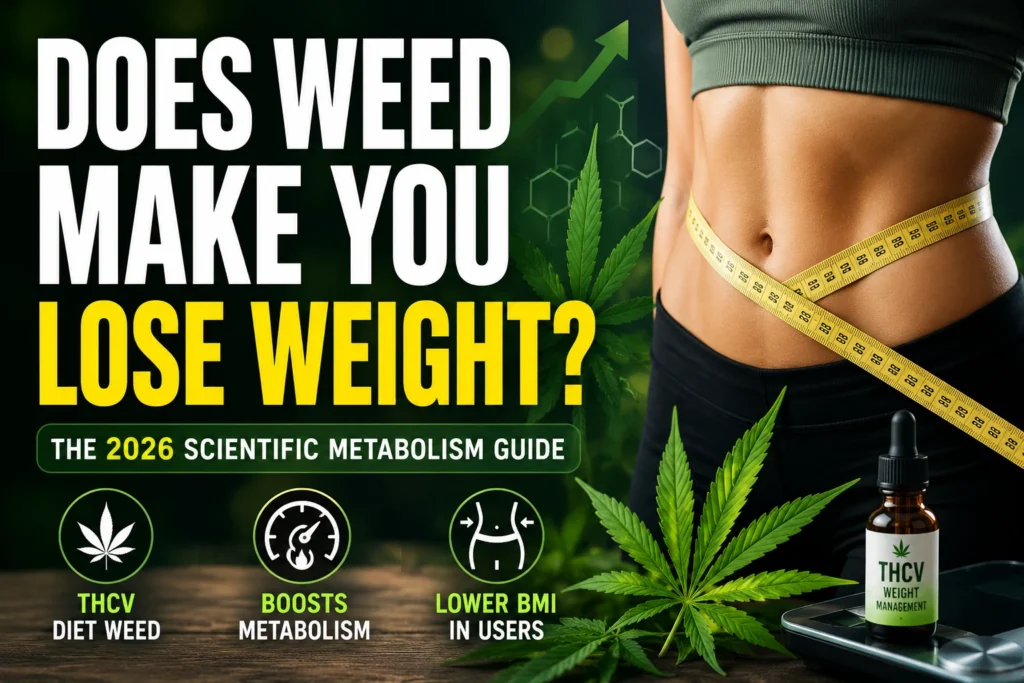
It seems like a contradiction: How can a substance that triggers intense hunger (the munchies) be associated with thinner waistlines? Yet, a 2026 survey of over 735,000 adults found that marijuana users were roughly 35% less likely to be obese than non-users.
So, is weed a secret weight-loss tool, or is there something else happening under the hood? Here is the “Pure Insight” into how cannabis interacts with your metabolism.
1. The “THCV” Factor: The Diet Weed
Not all cannabis is created equal. While Delta-9 THC is known for increasing appetite, a minor cannabinoid called THCV (Tetrahydrocannabivarin) has earned the nickname “diet weed.”
- Appetite Suppression: Unlike THC, THCV acts as an antagonist to the CB1 receptor, meaning it can actually reduce hunger.
- Metabolic Boost: 2025-2026 clinical trials have shown that THCV-infused strips can help reduce abdominal girth and improve insulin sensitivity.
- The Result: Many users are now seeking out specific THCV-rich strains specifically for weight management.
2. Metabolic Acceleration & Insulin Sensitivity
Regular cannabis use appears to change how the body processes energy. Research suggests that chronic exposure to cannabinoids may “downregulate” the CB1 receptors.
- Burn More at Rest: Some studies hint that cannabis may increase the basal metabolic rate, meaning your body burns more calories while sitting still.
- Blood Sugar Regulation: Users often show better carbohydrate metabolism and lower fasting insulin levels, which prevents the body from storing excess sugar as fat.
3. The Lifestyle Link: Stress and Sleep
Weight gain is rarely just about food; it’s often about stress (cortisol) and poor sleep.
- Lowering Cortisol: High stress leads to “emotional eating” and fat storage around the midsection. By reducing anxiety, cannabis can help lower cortisol levels.
- Better Recovery: Improving sleep quality is vital for weight loss. If you’re struggling with rest, check our guide on how many CBD gummies to take to relax.
The Catch: The “Munchies” are Still Real
While long-term users might see metabolic benefits, the immediate effect of high-THC weed is still a spike in Ghrelin (the hunger hormone). If you succumb to high-calorie “raid the fridge” sessions every night, you will likely gain weight regardless of your metabolism.
Official Medical & Legal Disclaimer
Medical Disclaimer: The information on PureInsights.blog is not medical advice. Cannabis is not an FDA-approved weight-loss supplement. Always consult your healthcare provider before using cannabis for weight management, especially if you have metabolic disorders or heart conditions.
Legal Disclaimer: While hemp-derived products are federally legal, marijuana laws vary. Check if weed is legal in Texas or Pennsylvania before purchasing.
FDA Disclosure: These statements have not been evaluated by the FDA. Products are not intended to diagnose, treat, or cure any disease.
FAQs
1. Does smoking weed burn calories?
Not directly. Smoking itself doesn’t burn significant calories, but the way cannabinoids interact with your endocannabinoid system may help your body process energy more efficiently over time.
2. Will I lose weight if I switch to CBD oil?
CBD is generally considered an appetite neutralizer or mild suppressor. It won’t cause the “munchies,” and its anti-inflammatory properties can help with exercise recovery.
3. Does weed affect my drug test if I’m losing fat?
Yes. THC is fat-soluble. If you are rapidly losing weight, stored THC can be released back into your bloodstream. To understand more, read our guide on how long CBD stays in your system.
4. Can I use weed for weight loss if I have a medical condition?
Always consult a doctor first. For instance, if you are preparing for surgery or managing kidney disease, cannabis can affect your medication’s effectiveness.

