
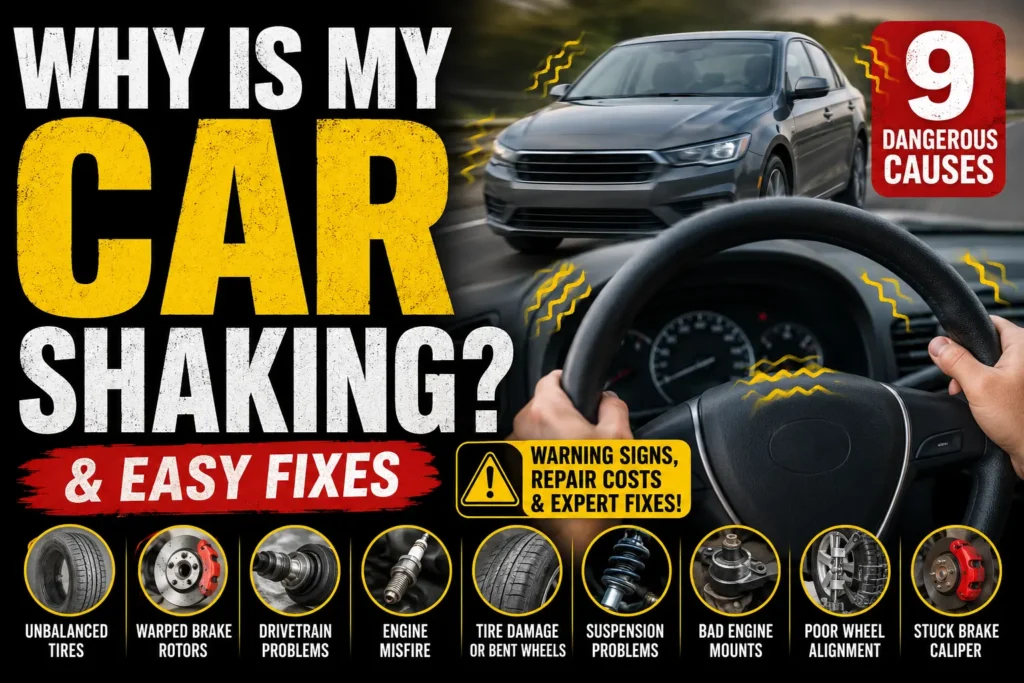
If you’re asking yourself, “why is my car shaking?”, you’re not alone. Many drivers notice vibrations while driving, braking, accelerating, or even sitting idle at a stoplight.
Sometimes the issue is minor, like tire imbalance. Other times, it could signal serious brake, engine, or suspension problems that should never be ignored.
The good news is that most shaking problems can be diagnosed early before they become expensive repairs.
In this guide, you’ll learn:
- Why your car is shaking
- The most common causes
- Warning signs to watch for
- Estimated repair costs
- When to visit a mechanic immediately
1. Unbalanced Tires (Most Common Cause)
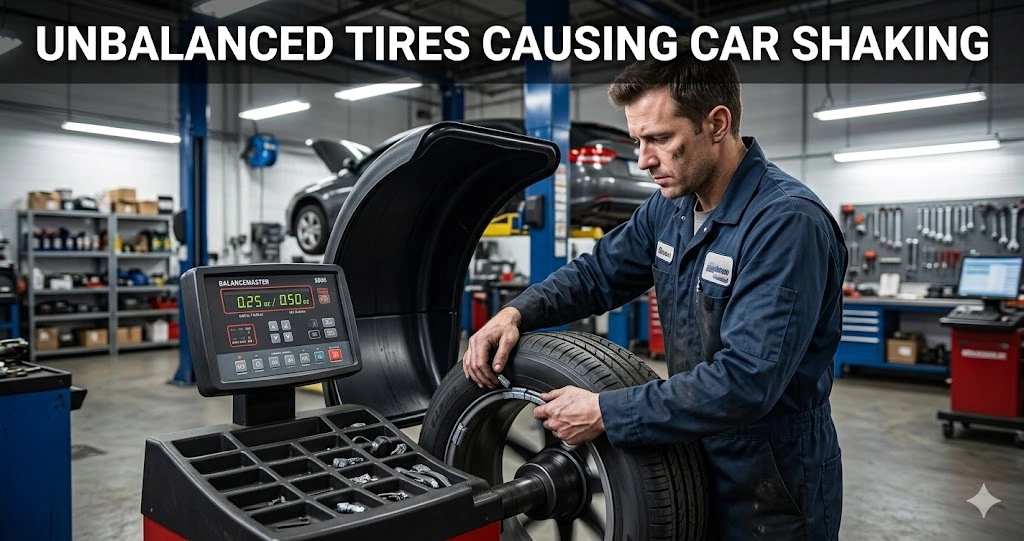
One of the most common answers to why is my car shaking while driving is unbalanced tires.
Tires naturally lose balance over time due to uneven wear, potholes, and rough roads. When this happens, vibrations usually become noticeable at higher speeds.
Common Symptoms
- Steering wheel shaking
- Vibrations above 50 mph
- Uneven tire wear
- Humming road noise
If your vibration gets worse as speed increases, tire imbalance is highly likely.
Regular tire balancing and rotation help improve ride comfort and reduce uneven tire wear.
Estimated Repair Cost
Usually around $15–$50 per tire.
2. Warped Brake Rotors
If your car shakes mainly while braking, warped brake rotors are often responsible.
Brake rotors can become uneven because of excessive heat or worn brake pads. This creates vibrations when you press the brake pedal.
Symptoms of Warped Rotors
- Steering wheel shaking while braking
- Pulsating brake pedal
- Squealing brake noises
- Longer stopping distance
Estimated Repair Cost
Usually between $150–$400 depending on the vehicle.
If your vehicle mainly vibrates during braking, read our detailed guide on Why Does My Car Shake When I Brake? for a deeper explanation of brake-related vibration problems.
For additional brake safety information, visit the National Highway Traffic Safety Administration
3. Why Is My Car Shaking When Accelerating?
If the shaking happens mainly during acceleration, the problem may involve the drivetrain or engine.
Common Causes
- Worn CV joints
- Damaged driveshaft
- Transmission problems
- Broken engine mounts
Symptoms
- Vibrations under acceleration
- Jerking movement
- Clunking noises
- Reduced engine performance
Ignoring drivetrain problems can lead to expensive transmission repairs later.
4. Bad Spark Plugs or Engine Misfire
Engine misfires are another major reason people search for why is my car shaking.
A faulty spark plug interrupts proper fuel combustion, causing rough engine performance and vibrations.
Common Symptoms
- Rough idle
- Check engine light
- Poor fuel economy
- Weak acceleration
Estimated Repair Cost
Typically $100–$300 depending on the vehicle.
Weak electrical performance from an aging battery can sometimes contribute to rough idling and vibration issues. You can also read our guide on How Long Does a Car Battery Last? Ultimate 3–5 Year Guide.
5. Tire Damage or Bent Wheels
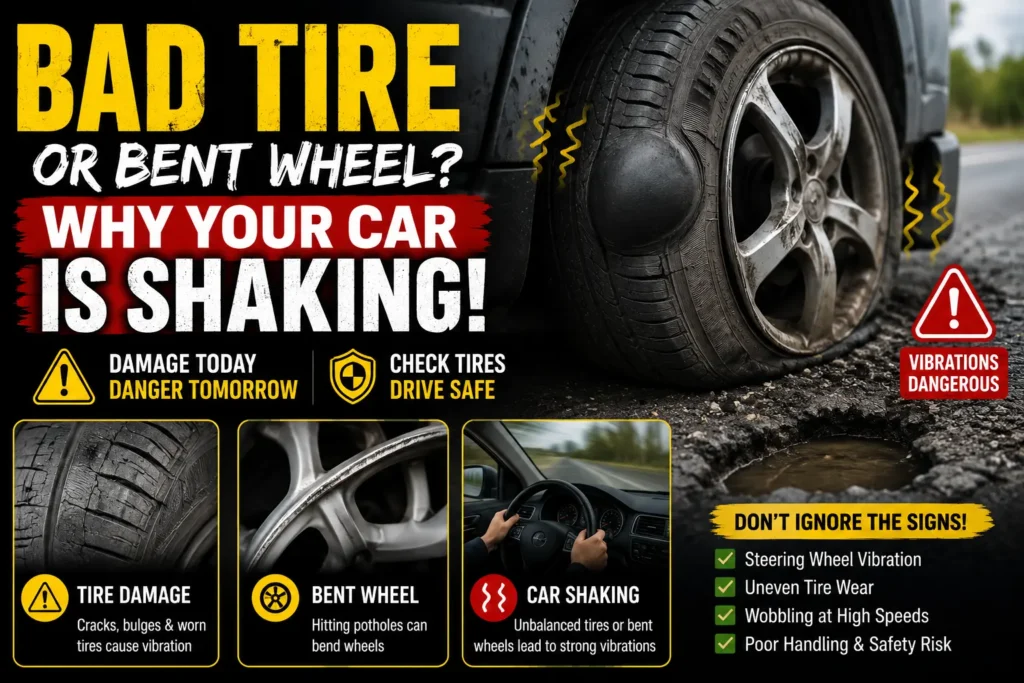
Damaged tires or bent wheels can create severe shaking, especially after hitting potholes or curbs. The Michelin Tire Safety Guide explains how to inspect tires safely and prevent vibration-related problems.
Warning Signs
- Tire bubbles
- Sidewall cracks
- Uneven tread wear
- Wobbling sensation
Driving with damaged tires increases the risk of blowouts and unsafe handling.
The Michelin Tire Safety Guide explains how to inspect tires safely.
6. Suspension Problems
Your suspension system absorbs road impacts and keeps your ride stable.
When suspension parts wear out, vibrations become more noticeable on rough roads.
Common Suspension Issues
- Worn shocks
- Bad struts
- Loose ball joints
- Damaged control arms
Symptoms
- Bouncy ride
- Vehicle pulling sideways
- Clunking noises
- Uneven tire wear
7. Loose or Broken Engine Mounts
Engine mounts secure the engine while reducing vibration inside the cabin.
When these mounts wear out or crack, engine movement becomes noticeable.
Signs of Bad Engine Mounts
- Excessive vibration at idle
- Loud thumping noises
- Engine movement during acceleration
Estimated Repair Cost
Usually around $200–$600.
8. Poor Wheel Alignment
Wheel alignment issues can easily explain why your car is shaking at high speed.
Misaligned wheels create uneven road contact, causing steering instability and vibrations.
Common Symptoms
- Crooked steering wheel
- Vehicle drifting left or right
- Uneven tire wear
Regular wheel alignments improve safety and extend tire lifespan.
9. Stuck Brake Caliper
A stuck brake caliper keeps pressure on one wheel and creates uneven braking force.
Warning Signs
- Burning smell
- Excessive wheel heat
- Car pulling to one side
Brake problems should always be repaired immediately for safety reasons.
When Should You Stop Driving?
You should seek immediate inspection if:
- The shaking suddenly becomes severe
- The check engine light flashes
- You hear grinding noises
- Steering feels unstable
- Braking performance decreases
These symptoms may indicate serious mechanical failure.
How Mechanics Diagnose Car Shaking
Professional mechanics usually inspect:
- Tires and wheels
- Brake rotors
- Suspension components
- Engine performance
- Transmission and drivetrain
Computer diagnostics may also detect hidden engine misfires.
Tips to Prevent Car Vibrations
Preventive maintenance helps reduce the risk of shaking problems.
Best Prevention Tips
- Rotate tires every 5,000–7,000 miles
- Balance wheels regularly
- Replace worn brake pads early
- Check wheel alignment yearly
- Inspect suspension components
- Replace spark plugs on schedule
Routine maintenance improves comfort, safety, and fuel efficiency.
FAQ
Why is my car shaking while driving?
The most common causes are unbalanced tires, wheel alignment problems, or damaged suspension components.
Why is my car shaking when braking?
Warped brake rotors are the most common reason for braking vibrations.
Can bad tires cause car shaking?
Yes. Uneven wear, low pressure, or tire damage can all create strong vibrations.
Is it safe to drive a shaking car?
Minor vibrations may not be dangerous immediately, but severe shaking should be inspected as soon as possible.
Conclusion
If you’ve been wondering why is my car shaking, the problem could range from simple tire imbalance to serious brake or engine issues.
The key is identifying:
- When the shaking happens
- How strong the vibration feels
- Whether other warning signs appear
Fixing small problems early can prevent expensive repairs later.
Regular tire balancing, brake inspections, and engine maintenance will help keep your vehicle smooth, safe, and reliable for years to come.

