
Many people associate weed with one thing: the munchies. After consuming cannabis, it’s common to feel hungrier than usual and reach for snacks. Because of this, many assume marijuana automatically causes weight gain.
But here’s where things get interesting.
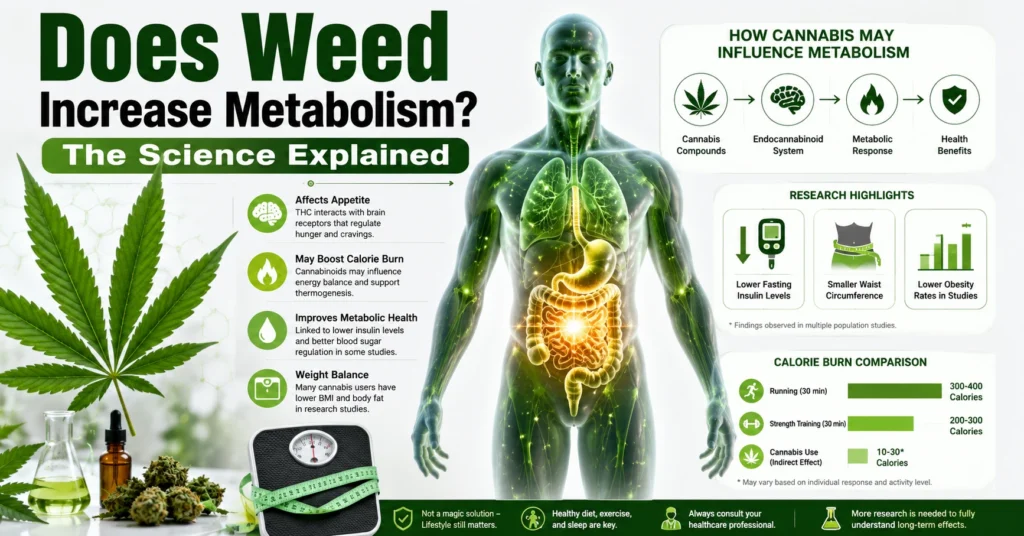
Several studies have found that regular cannabis users often have lower body mass indexes (BMI) and lower obesity rates than non-users. That finding has led many people to ask an important question: Does Weed Increase Metabolism?
The answer isn’t completely straightforward. While cannabis may influence how the body regulates energy, appetite, and fat storage, researchers are still working to understand the full picture.
In this guide, we’ll explore the science behind weed and metabolism, examine what current studies show, and separate facts from myths.
What Is Metabolism?
Before answering Does Weed Increase Metabolism, it’s helpful to understand what metabolism actually means.
Metabolism refers to the chemical processes that keep your body functioning. These processes help convert food into energy and support essential functions such as:
- Breathing
- Digestion
- Cell repair
- Hormone regulation
- Body temperature control
A faster metabolism generally means your body burns calories more efficiently, while a slower metabolism burns fewer calories at rest.
Many factors influence metabolism, including:
- Age
- Genetics
- Muscle mass
- Physical activity
- Sleep quality
- Diet
Does Weed Increase Metabolism?
Current research suggests cannabis may affect metabolic processes, but there is no definitive proof that it dramatically increases metabolic rate.
Cannabis interacts with the body’s endocannabinoid system (ECS), a network of receptors involved in regulating:
- Appetite
- Energy balance
- Fat storage
- Blood sugar control
- Metabolism
The primary psychoactive compound in cannabis, THC, binds to cannabinoid receptors and may influence how the body processes calories and stores fat.
Some studies suggest cannabis users tend to have healthier metabolic markers compared to non-users. However, researchers have not proven that marijuana directly boosts metabolism in the same way exercise or increased muscle mass can.
Why Some Weed Users Weigh Less
One of the biggest surprises in cannabis research is that many users appear to weigh less despite consuming more calories.
Several explanations have been proposed.
Better Insulin Sensitivity
Research suggests cannabis users may have improved insulin sensitivity.
When insulin functions efficiently, the body can better regulate blood sugar and may store less excess fat.
Endocannabinoid System Adaptation
Frequent cannabis use may alter how cannabinoid receptors respond over time.
This adaptation could potentially affect hunger signals and energy balance differently than occasional use.
Increased Physical Activity
Some cannabis users report being more active after consuming certain strains.
Activities commonly associated with cannabis use include:
- Walking
- Hiking
- Cycling
- Yoga
- Recreational sports
These lifestyle habits may contribute to healthier body weight.
Gut Microbiome Effects
Emerging research suggests cannabis may influence gut bacteria, which play a role in metabolism and weight regulation.
Scientists are still investigating this area, but early findings are promising.
The Relationship Between Weed and Appetite
When discussing Does Weed Increase Metabolism, appetite cannot be ignored.
THC is known to stimulate hunger by activating brain regions linked to food cravings.
This is why many users experience the famous “munchies.”
However, appetite and metabolism are not the same thing.
A person can experience increased hunger without experiencing a significant increase in calorie burning.
For example:
- Eating 1,000 extra calories after smoking weed could lead to weight gain.
- Maintaining an active lifestyle while managing calorie intake may prevent weight gain.
The overall outcome depends on individual habits.
For a deeper look at cannabis and body weight, read our guide on Does Weed Make You Lose Weight?.
THC vs CBD: Which Affects Metabolism More?
Cannabis contains hundreds of compounds, but THC and CBD receive the most attention.
THC
THC is responsible for the psychoactive effects of marijuana.
Potential effects include:
- Increased appetite
- Changes in energy balance
- Altered glucose processing
CBD
CBD does not produce a high and may influence metabolism differently.
Some preliminary research suggests CBD may:
- Support healthy inflammation responses
- Influence fat metabolism
- Encourage the conversion of white fat into brown fat
However, more human studies are needed before any firm conclusions can be made.
If you’re new to cannabinoids, you may also find our article on Does Hemp Oil Have CBD? helpful.

Can Weed Help You Lose Weight?
Many people searching “Does Weed Increase Metabolism” are ultimately asking whether cannabis can help with weight loss.
The answer is complicated.
Cannabis should not be considered a weight-loss supplement.
Some individuals report:
- Better stress management
- Improved exercise enjoyment
- Reduced alcohol consumption
- Healthier lifestyle habits
Others report:
- Increased snacking
- Higher calorie intake
- Weight gain
Results vary significantly from person to person.
Common Myths About Weed and Metabolism
Myth #1: Weed Burns Fat Automatically
False.
There is no evidence that cannabis directly burns fat.
Myth #2: All Weed Users Are Thin
False.
Body weight depends on numerous factors beyond cannabis use.
Myth #3: The Munchies Always Cause Weight Gain
Not necessarily.
Overall calorie intake and activity levels matter more than occasional cravings.
Myth #4: Cannabis Replaces Exercise
False.
Regular exercise remains one of the most effective ways to improve metabolic health.
Practical Tips for Cannabis Users
If you’re concerned about weight management while using cannabis, consider these strategies:
- Plan healthy snacks in advance.
- Stay physically active.
- Prioritize sleep quality.
- Drink plenty of water.
- Monitor portion sizes.
- Choose nutrient-dense foods.
These habits will have a much greater impact on metabolism than cannabis alone.
You may also want to learn more about Does CBD Make You Hungry? and how cannabinoids affect appetite.

What Do Experts Say?
According to research published by the U.S. National Institutes of Health (NIH), cannabis users often display lower fasting insulin levels and smaller waist circumferences compared to non-users.
Similarly, research discussed by Harvard Health suggests that the relationship between cannabis and body weight is more complex than many people assume.
These findings indicate cannabis may influence metabolic health, but researchers continue to study the exact mechanisms involved.
For more information:
FAQ
Does weed increase metabolism immediately?
No evidence suggests cannabis instantly increases metabolic rate. Any effects appear indirect and may vary between individuals.
Why do some weed users stay thin?
Researchers believe factors such as insulin sensitivity, lifestyle habits, and endocannabinoid system activity may contribute.
Can weed help with weight loss?
Cannabis is not a proven weight-loss solution. Results differ widely depending on diet, activity level, and overall health.
Does CBD increase metabolism?
Some early studies suggest CBD may influence metabolism, but more research is needed before definitive conclusions can be made.
Conclusion
So, Does Weed Increase Metabolism?
Current evidence suggests cannabis may influence metabolism, appetite regulation, insulin sensitivity, and body weight. However, researchers have not proven that weed directly boosts metabolism in a significant way.
While some cannabis users appear to have lower obesity rates and healthier metabolic markers, the relationship is complex and influenced by many factors.
The most reliable ways to improve metabolism remain consistent: regular exercise, balanced nutrition, adequate sleep, and healthy lifestyle choices.
Cannabis may play a role in the body’s energy-regulation systems, but it should not be viewed as a shortcut to weight loss or better metabolic health. Understanding the science can help users make more informed decisions and maintain realistic expectations.

