

When you turn your steering wheel, dozens of mechanical parts work together to transfer that movement to your vehicle’s wheels. Yet many drivers have no idea what happens between the steering wheel and the steering rack.
If you’ve ever wondered what are all the parts on an steering shaft, you’re not alone. Whether you’re diagnosing a steering problem, planning repairs, or simply learning more about your vehicle, understanding the steering shaft assembly can save time and money.
This guide explains every major steering shaft component, its purpose, common failure signs, and how the entire system works together.
What Is a Steering Shaft?
A steering shaft is the mechanical link between the steering wheel and the steering gear or steering rack. It transfers rotational movement from the driver to the steering system, allowing the vehicle to change direction.
Modern vehicles typically use multiple shaft sections and joints to improve safety, comfort, and steering precision.
What Are All the Parts on an Steering Shaft?
The answer depends slightly on the vehicle model, but most steering shaft assemblies contain the following components:
1. Steering Column
The steering column houses the upper portion of the steering shaft and connects directly to the steering wheel.
Functions include:
- Supporting the steering wheel
- Protecting internal shaft components
- Housing switches and controls
- Improving crash safety
Modern steering columns are often collapsible to reduce driver injuries during collisions.
2. Upper Steering Shaft
The upper steering shaft sits inside the steering column.
Its job is straightforward:
- Receives input from the steering wheel
- Transfers rotational force downward
This shaft is usually made from hardened steel for durability.
3. Intermediate Steering Shaft
The intermediate shaft connects the upper shaft to the steering gear or rack.
This component is especially important because it:
- Accommodates engine movement
- Handles alignment variations
- Maintains steering responsiveness
Many steering complaints originate from worn intermediate shafts.
4. Universal Joints (U-Joints)
Universal joints are among the most important answers to the question, what are all the parts on an steering shaft.
These joints allow the steering shaft to operate at different angles.
Benefits include:
- Flexible movement
- Reduced vibration
- Better packaging in crowded engine bays
Most vehicles use one or two U-joints.
5. Slip Joint or Telescoping Section
The slip joint allows the steering shaft to change length slightly.
Its primary purposes are:
- Accommodating vehicle flex
- Supporting crash protection
- Maintaining alignment
Without a telescoping section, steering components could bind or become damaged.
6. Steering Coupler
A steering coupler connects shaft sections while absorbing vibration.
Common materials include:
- Rubber
- Composite materials
- Reinforced polymers
The coupler improves steering comfort and reduces noise transmitted to the cabin.
7. Steering Shaft Bearings
Bearings support shaft rotation and minimize friction.
These bearings help:
- Create smooth steering feel
- Reduce wear
- Maintain shaft alignment
Worn bearings often cause looseness or unusual steering noises.
8. Firewall Seal and Boot
The steering shaft passes through the vehicle firewall.
A protective seal prevents:
- Water intrusion
- Dust contamination
- Excess cabin noise
Although small, this component plays a vital role in vehicle protection.
9. Steering Gear or Rack Connection
The final shaft connection links to the steering rack or steering gearbox.
This connection converts steering wheel movement into wheel movement.
Depending on the vehicle, it may connect to:
- Rack-and-pinion systems
- Recirculating ball steering boxes
How These Components Work Together
To fully understand what are all the parts on an steering shaft, it helps to see the process:
- Driver turns the steering wheel.
- Upper steering shaft rotates.
- Steering column supports movement.
- Intermediate shaft transfers rotation.
- Universal joints accommodate angles.
- Slip joint compensates for movement.
- Steering rack receives input.
- Front wheels change direction.
The process happens almost instantly, providing precise vehicle control.
Common Signs of Steering Shaft Problems
A damaged steering shaft can affect safety and handling.
Watch for symptoms such as:
Clunking Noises
Often caused by:
- Worn U-joints
- Loose couplers
- Excessive shaft play
Steering Wheel Vibration
May indicate:
- Damaged couplers
- Bent shaft sections
- Bearing wear
Excessive Steering Play
If the steering wheel moves before the wheels respond, the steering shaft assembly could be worn.
Stiff Steering
Possible causes include:
- Binding joints
- Corroded shaft components
- Damaged bearings
If your vehicle exhibits shaking or vibration symptoms, our guide on why is my car shaking can help identify related issues.

Can You Drive With a Bad Steering Shaft?
Driving with a damaged steering shaft is not recommended.
Minor wear can quickly become a serious safety issue because the steering shaft is directly responsible for vehicle control.
A failed U-joint or coupler can lead to:
- Poor steering response
- Loss of steering precision
- Increased accident risk
The steering system should be inspected immediately if unusual symptoms appear.
For routine vehicle health checks, you may also find these guides useful:


How to Inspect a Steering Shaft
A basic inspection involves:
Step 1: Check for Excessive Play
Turn the steering wheel slightly while observing shaft movement.
Step 2: Inspect Universal Joints
Look for:
- Rust
- Wear
- Loose movement
Step 3: Examine the Coupler
Check for cracks or deterioration.
Step 4: Listen for Noise
Clunks and clicks often indicate worn components.
For manufacturer-specific steering system information, consult resources from the National Highway Traffic Safety Administration (NHTSA) and SAE International, which provide valuable automotive safety and engineering guidance.
Modern vs. Older Steering Shaft Designs
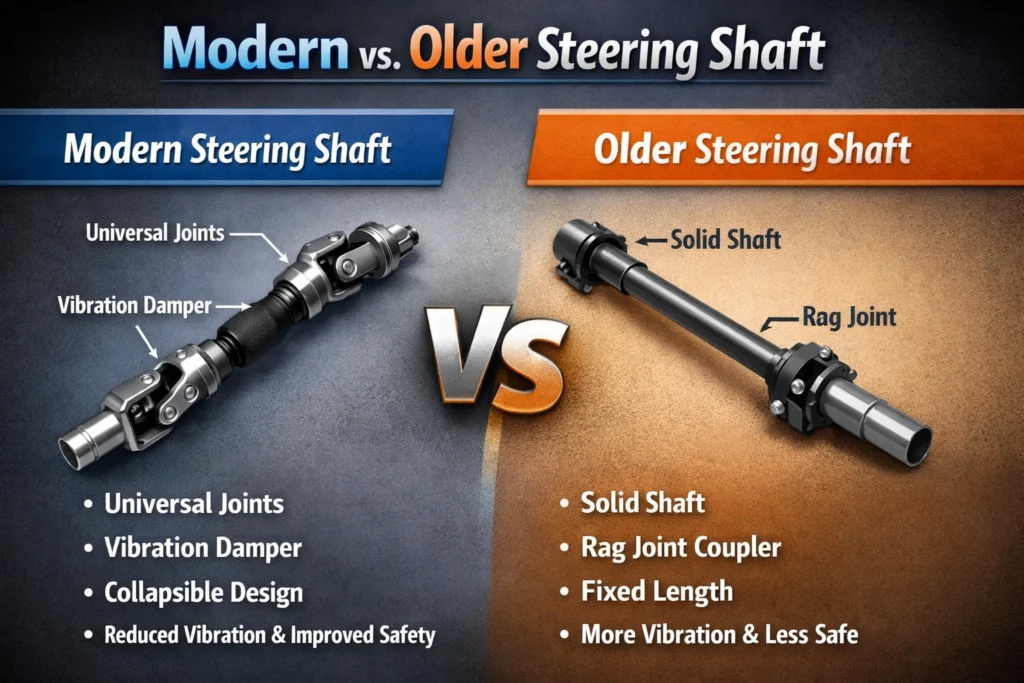
Many articles stop at component lists, but understanding design evolution provides valuable context.
These advancements significantly improve both safety and driving comfort.
Frequently Asked Questions
What is the most important part of a steering shaft?
The universal joints and intermediate shaft are critical because they transfer steering input while accommodating alignment changes.
How many parts are typically in a steering shaft assembly?
Most modern vehicles have 7–10 major steering shaft components, depending on design.
Can a steering shaft be repaired?
Some components, such as couplers or U-joints, can be replaced individually. In other cases, the entire assembly must be replaced.
How long does a steering shaft last?
Many steering shafts last the lifetime of the vehicle, although bearings, couplers, and U-joints may wear over time.
Conclusion
If you’ve been asking what are all the parts on an steering shaft, the assembly typically includes the steering column, upper shaft, intermediate shaft, universal joints, slip joint, coupler, bearings, firewall seal, and steering rack connection.
Each component serves a specific purpose in delivering smooth, accurate steering. Understanding these parts helps you diagnose problems early, communicate more effectively with mechanics, and maintain your vehicle’s safety.
The next time you turn the steering wheel, you’ll know exactly how a series of carefully engineered components work together to keep your vehicle moving in the right direction.

