
If you’re preparing for a drug test or simply curious about cannabis detection times, one question comes up repeatedly: How Long Does Weed Stay In Hair Follicle?
Unlike urine or saliva tests, hair follicle tests can detect marijuana use for a much longer period. That’s because traces of THC metabolites become trapped in growing hair strands and remain there for months.
In this guide, you’ll learn how hair follicle testing works, how long THC can be detected, what factors influence results, and what science says about detection windows.
How Long Does Weed Stay In Hair Follicle Exactly?
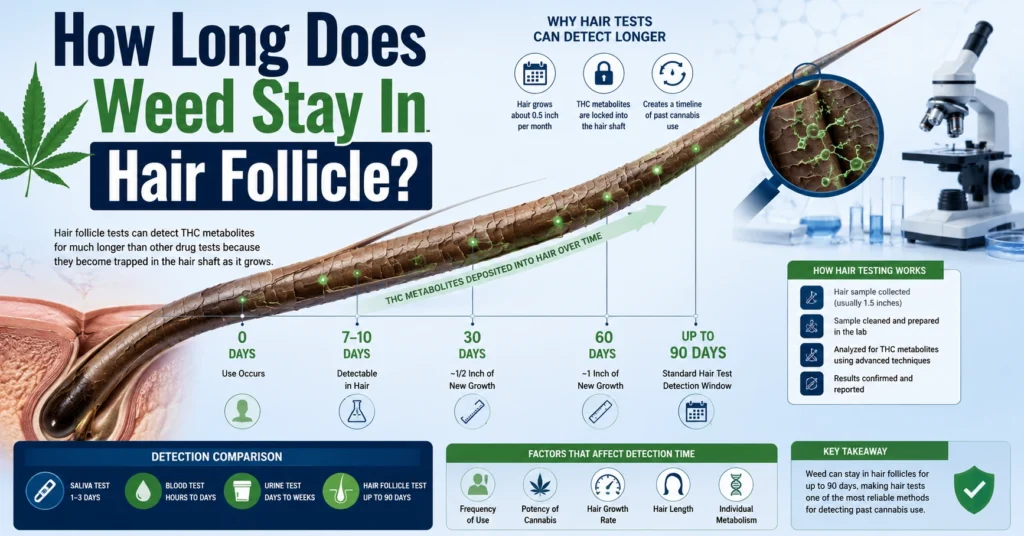
In most cases, weed can remain detectable in hair follicles for up to 90 days after use.
Hair follicle tests typically analyze the most recent 1.5 inches of hair growth taken from the scalp. Since hair grows approximately half an inch per month, this provides a detection window of around three months.
However, some specialized tests may detect evidence of cannabis use beyond 90 days if longer hair samples are examined.
Typical Detection Window
| Test Type | Detection Window |
|---|---|
| Saliva Test | 1–3 days |
| Blood Test | Hours to days |
| Urine Test | Days to weeks |
| Hair Follicle Test | Up to 90 days |
This extended detection period makes hair testing one of the most comprehensive methods for identifying past cannabis use.
How Does a Hair Follicle Drug Test Work?
Despite the name, laboratories don’t actually test the follicle itself. Instead, they test the hair shaft.
When cannabis is consumed, the body breaks THC down into metabolites. These metabolites enter the bloodstream and can become incorporated into growing hair.
During testing:
- A small hair sample is collected.
- The sample is cleaned and prepared.
- Laboratory analysis searches for THC metabolites.
- Positive results are confirmed using advanced testing methods.
Because the metabolites become embedded within the hair structure, they are difficult to remove through normal washing or grooming.
Factors That Affect How Long Weed Stays In Hair Follicle
Several factors can influence whether THC is detectable in a hair follicle test.
Frequency of Use
Frequent cannabis users tend to accumulate more THC metabolites in their bodies.
Generally:
- Occasional users may have lower concentrations.
- Moderate users may show stronger results.
- Heavy users often have higher detectable levels.
Hair Growth Rate
Hair grows at slightly different rates from person to person. Faster growth may move detectable metabolites farther from the scalp over time.
Hair Length
Longer hair can potentially preserve a longer history of drug use if additional segments are analyzed.
Potency of Cannabis
High-THC cannabis products may contribute to greater metabolite accumulation than lower-potency products.
Can a Hair Follicle Test Detect One-Time Weed Use?
This is one of the most debated questions regarding cannabis testing.
While hair follicle tests are primarily designed to identify repeated or chronic drug use, some studies suggest that a single use event may occasionally be detected under certain circumstances.
However, detection after one-time use is generally less reliable than detection after repeated use.
Laboratories often establish cutoff levels to reduce false positives and ensure accuracy.
Is It Possible to Remove THC From Hair?
Many products claim to help individuals pass a hair follicle test, but scientific evidence supporting these claims is limited.
Common myths include:
- Special detox shampoos
- Vinegar treatments
- Baking soda washes
- Excessive hair washing
Because THC metabolites are embedded within the hair shaft, external cleaning methods typically have limited effectiveness.
Attempting to alter or damage hair samples may also raise concerns during testing procedures.
Why Hair Testing Is Popular
Employers and organizations often choose hair testing because it offers several advantages.
Benefits of Hair Testing
- Long detection window
- Difficult to tamper with
- Provides historical drug-use information
- Reliable laboratory confirmation
These advantages make hair testing a common choice for workplace screening and legal investigations.
Weed Detection Compared to Other Cannabis Questions
Many people researching drug testing also want to understand cannabis-related topics such as health effects, legality, and usage patterns.
For example, if you’re interested in how cannabis affects body weight,

read Does Weed Make You Lose Weight?
If you’re wondering about cannabis quantities and pricing, check out How Much Is a Gram of Weed? and How Much Is a Quarter of Weed?.

You may also find our guide on How Long Does CBD Stay in Your System? useful for understanding cannabinoid detection times.
For legal considerations, visit Is Weed Legal in Texas?

What Science Says About Hair Follicle Testing
Research shows that hair analysis is effective for detecting long-term drug exposure.
Organizations such as the Substance Abuse and Mental Health Services Administration (SAMHSA) and the National Institute on Drug Abuse (NIDA) provide information about drug testing methods and limitations.
While hair testing is highly effective, no test is perfect. Results should always be interpreted in context and confirmed through established laboratory procedures.
FAQ
How Long Does Weed Stay In Hair Follicle For Heavy Users?
Heavy users can test positive for approximately 90 days or longer, depending on hair length and testing methods.
Can Hair Dye Remove THC From Hair?
Hair dye may alter hair structure, but it does not reliably eliminate THC metabolites embedded within the hair shaft.
Does Shaving Your Head Help Pass a Hair Test?
Not necessarily. Testing facilities may collect hair from other body areas if scalp hair is unavailable.
Are Hair Follicle Tests More Accurate Than Urine Tests?
Hair tests provide a longer detection window, while urine tests are generally better for detecting more recent cannabis use.
Conclusion
So, how long does weed stay in hair follicle? In most cases, THC metabolites can be detected for up to 90 days, making hair testing one of the longest-lasting forms of drug screening available.
The exact detection period depends on factors such as frequency of use, hair growth rate, and testing procedures. While many myths suggest quick ways to remove THC from hair, scientific evidence indicates that hair follicle testing remains a highly reliable method for identifying past cannabis exposure.
Understanding how these tests work can help you make informed decisions and set realistic expectations if you’re facing a drug screening in the future.

