
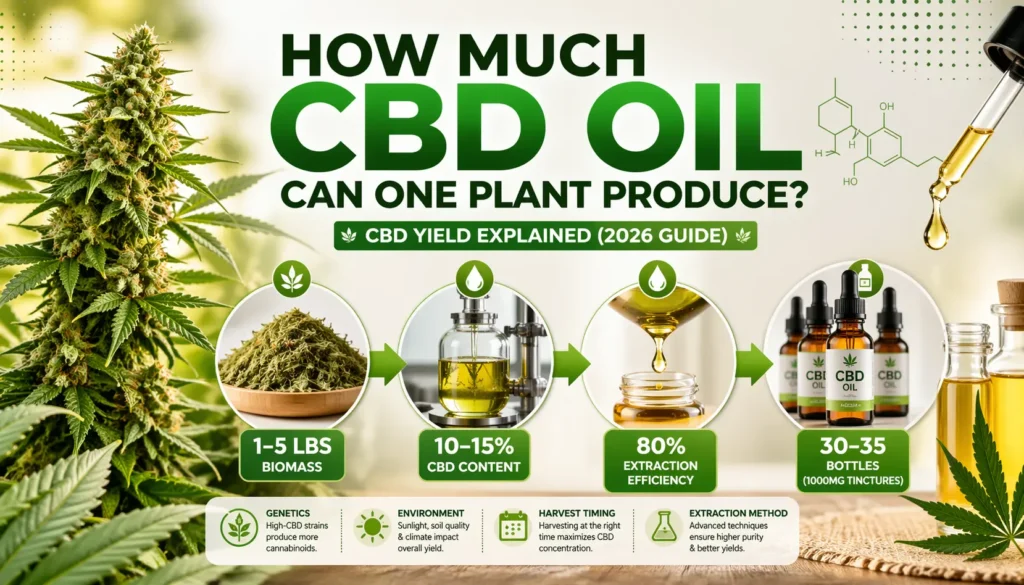
As the demand for CBD products continues to rise, many enthusiasts and potential growers ask: “Exactly how much CBD oil can one plant produce?” While it might seem like a simple question, the answer depends on a variety of factors, from the genetics of the hemp plant to the efficiency of the extraction method used. In this guide, we will break down the numbers and the science behind CBD yields.
The Math Behind the Yield
To calculate how much oil you get, you first have to look at the Biomass (the dried plant material).
On average, a single industrial hemp plant grown under optimal conditions can produce approximately 1 to 5 pounds of dried biomass. However, not all of that biomass is CBD.
1. The CBD Percentage
The amount of CBD in a plant is usually expressed as a percentage. High-quality CBD strains typically contain between 10% and 15% CBD.
2. The Extraction Efficiency
No extraction method is 100% efficient. Whether using CO2 or ethanol extraction, you typically lose about 10% to 20% of the cannabinoids during the process.
Average Yield Calculation
Let’s look at a realistic example:
- Plant Weight: 1 lb (approx. 450 grams) of dried flowers.
- CBD Content: 10%.
- Total CBD Available: 45 grams.
- After Extraction (80% efficiency): You end up with roughly 36 grams of pure CBD isolate.
When this isolate is mixed with a carrier oil (like MCT or Hemp Seed Oil) to create a standard 1000mg tincture, that single pound of biomass can produce roughly 30 to 35 bottles of CBD oil!
Factors That Affect Your CBD Yield
- Genetics: Some strains are bred specifically for high CBD resin, while others are better for fiber.
- Climate & Soil: Hemp is hardy, but the best oil yields come from plants with plenty of sunlight and nutrient-rich soil.
- Harvest Timing: Harvesting too early or too late can significantly drop the CBD concentration.
- Hemp vs. Marijuana: It is important to remember the legal distinction. As we’ve noted in our article Is Hemp and CBD the Same?, industrial hemp must contain less than 0.3% THC to be legal and yield the purest CBD.
From Plant to Product
Once the oil is extracted, it can be used in various ways. For instance, if you are interested in DIY methods, you might want to learn how do you make CBD gummies using the oil derived from your plants.
The potency of the final product will also determine how long does CBD stay in your system, as higher yields often lead to more concentrated doses.
Conclusion
While a single plant can produce a significant amount of CBD—potentially enough for dozens of bottles—the quality of that oil depends on the “Pure Insights” you apply during the growing and extraction phases. For those looking to enter the market or just curious about the process, understanding these ratios is the first step toward success.
Disclaimer: Growing hemp is subject to local laws and regulations. Ensure you have the proper licenses before attempting to cultivate or extract CBD.
FAQs:
Q1: How many acres of hemp do I need to make a gallon of CBD oil?
Ans: On average, it takes about 500 to 1,000 pounds of biomass to produce a gallon of CBD oil, which can usually be grown on 1/10th to 1/4th of an acre depending on plant density.
Q2: Does the “Whole Plant” produce oil?
Ans: While the stalks and seeds have uses, the highest concentration of CBD oil is found in the flowers (buds) and the small leaves surrounding them.
Q3: Can I increase the CBD percentage by using more fertilizer?
Ans: Only to a certain extent. Genetics set the “ceiling” for CBD production, but proper nutrients help the plant reach its maximum potential.

