
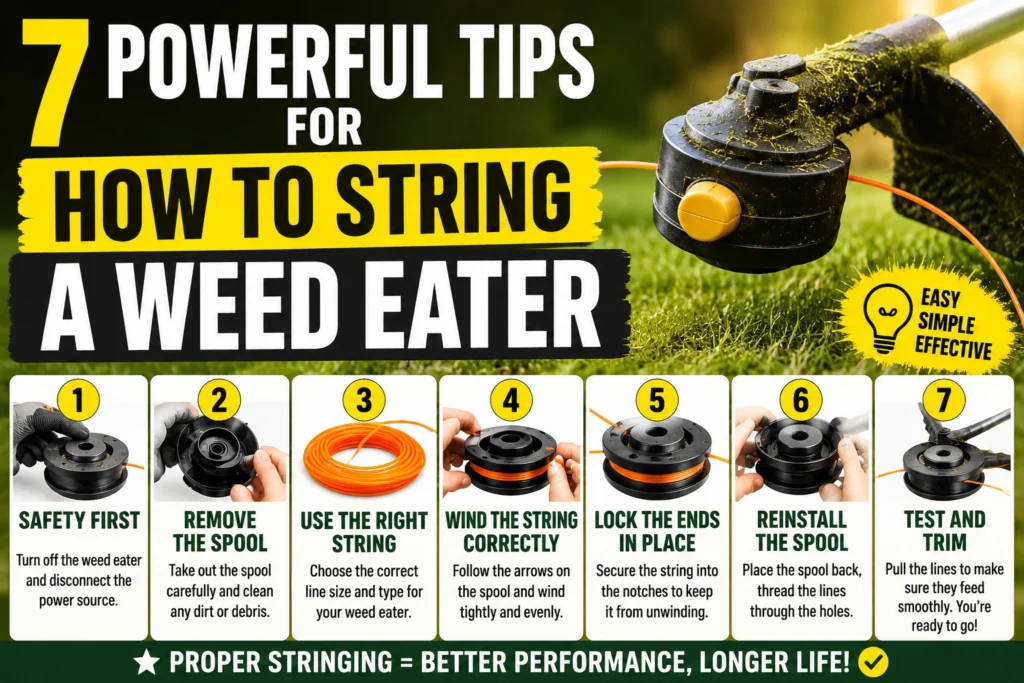
A weed eater makes lawn work much easier, but running out of string in the middle of trimming can get annoying fast. Many people also deal with tangled spools, broken line, or string that does not feed properly.
The good news is that learning How To String A Weed Eater is actually simple once you know the right steps.
When the string is installed correctly, your trimmer cuts better, works smoother, and lasts longer. Different weed eaters use different line sizes, so using the correct string is important.
Tools You Need Before You Start
Before you begin, keep these things ready:
Replacement Trimmer Line
Most home weed eaters use nylon string between .065 and .095 inches thick.
Scissors or Wire Cutters
Used for cutting the line.
Safety Gloves
Helpful for protecting your hands.
Owner’s Manual
Useful if you want to check the correct string size for your model.
Using the correct trimmer line helps your weed eater work properly. Lawn equipment brands like STIHL Trimmer Line Guide also recommend matching the line size with your machine.
How To String A Weed Eater
Step 1: Turn Off the Weed Eater
Safety comes first.
- Gas trimmer → disconnect the spark plug
- Battery trimmer → remove the battery
- Electric trimmer → unplug the cord
Never change the string while the machine still has power.
For extra lawn equipment safety tips, check the Consumer Product Safety Commission guidelines.
Step 2: Remove the Spool Head
Most weed eaters have a spool cap that can be opened by pressing side tabs or twisting the cap.
Remove the spool carefully and notice how it fits inside.
Step 3: Remove the Old String
Take out the old line and clean any dirt or grass inside the spool area.
Cleaning the spool helps prevent feeding problems later.
Step 4: Cut the Right Amount of String
Most weed eaters need around 10 to 25 feet of line.
Using too much string can cause tangles inside the spool.
Step 5: Wind the String Properly
This is the most important step.
Look for arrows on the spool that show which direction to wind the string. Wrap the line tightly and evenly.
Avoid:
- Loose winding
- Twisted line
- Overlapping wraps
If the string is not wound correctly, it may not feed properly while trimming.
Step 6: Lock the String Ends
Many spools have small holes or slots to hold the string in place temporarily.
Put the ends into those slots before reinstalling the spool.
Step 7: Reinstall the Spool
Place the spool back into the weed eater head and feed the string through the holes.
Close the cap properly and pull the string gently to make sure it moves freely.
Common Mistakes When Learning How To String A Weed Eater
Many weed eater problems happen because of small mistakes.
Using the Wrong String Size
Thick line may not work well in small trimmers, while thin line can break too easily.
Putting Too Much String on the Spool
Overfilling the spool is one of the biggest reasons for jams.
Winding the String Loosely
Loose winding causes tangles inside the spool.
Ignoring a Damaged Spool
Sometimes the spool itself is cracked or worn out, which can stop the line from feeding smoothly.
Choosing the Best Weed Eater String
Different types of trimmer line work for different jobs.
Round Line
Best for normal grass trimming.
Twisted Line
Makes less noise and vibration.
Square Line
Good for thick grass and weeds.
Serrated Line
Cuts heavy weeds more easily.
Choosing the right string helps your weed eater cut faster and cleaner.
Battery vs Gas Weed Eaters
The restringing process is almost the same for both types.
But there are a few differences:
- Gas trimmers usually use thicker line
- Battery trimmers often use thinner line
- Commercial trimmers may use dual-line spools
Knowing your machine helps avoid problems later.
How Often Should You Replace the String?
That depends on how often you trim your lawn.
You may need new string if you notice:
- Frequent breaking
- Weak cutting
- Uneven trimming
- Constant spool jams
Replacing the line regularly keeps your weed eater working smoothly.
Helpful Lawn Care Tips
Good lawn care is not only about trimming grass. Removing weeds also helps keep your yard clean and healthy.
You may also like these guides:
FAQ
How much string should I use in a weed eater?
Most home trimmers need around 10 to 25 feet of line.
Why does string break after learning How To String A Weed Eater?
Wrong string size, loose winding, or hitting hard surfaces can cause the line to break.
Can I use any trimmer line?
No. Always use the line size recommended for your weed eater.
How do I know which way to wind the string?
Most spools have arrows showing the correct winding direction.
Final Thoughts
Learning how to string a weed eater correctly can save you a lot of time and frustration.
Most problems happen because the line is wound the wrong way, overfilled, or the wrong string size is used. Once you learn the proper method, replacing the string becomes quick and easy.
With the right setup, your weed eater will cut better, feed string smoothly, and make lawn care much easier.

