
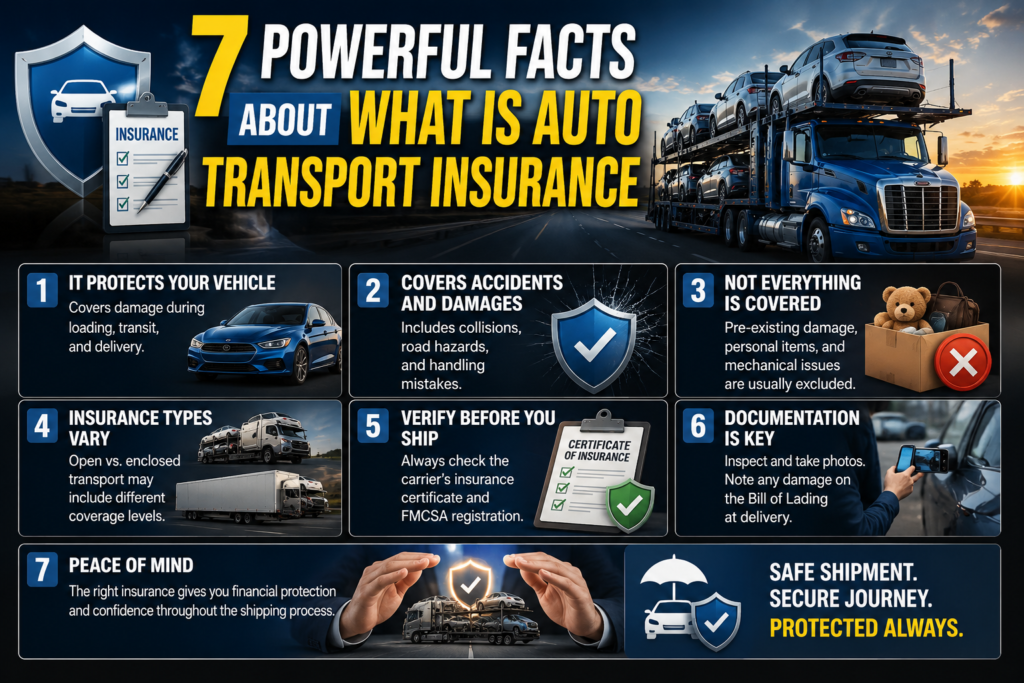
Shipping a vehicle across the country can feel stressful, especially when you hand over the keys to a transport company. That is why many customers ask the same important question: what is auto transport insurance?
Most people assume their car is automatically fully protected during shipping. In reality, coverage can vary depending on the carrier, transport method, and insurance policy details.
Whether you are moving to another state, purchasing a vehicle online, or transporting a luxury car, understanding auto transport insurance can help you avoid expensive surprises later.
This guide explains everything in simple terms, including what transport insurance covers, what it does not cover, how claims work, and the mistakes customers should avoid before shipping a vehicle.
What Is Auto Transport Insurance?
Auto transport insurance is coverage designed to protect vehicles while they are being shipped by a professional car carrier.
The insurance usually applies during:
- Vehicle loading
- Highway transit
- Unloading
- Carrier handling
Licensed auto transport companies are generally required to carry cargo and liability insurance. However, coverage limits and policy conditions differ between carriers.
That is where many customers become confused.
Some companies advertise “fully insured transport,” but the actual policy may still contain restrictions, deductibles, or exclusions.
Why Auto Transport Insurance Matters
Even experienced transport companies cannot eliminate every risk on the road.
Vehicles may face:
- Road debris
- Unexpected weather
- Loading accidents
- Traffic incidents
- Trailer equipment failures
Auto transport insurance provides financial protection if damage occurs during shipping.
This becomes especially important for luxury or collectible vehicles. Owners transporting premium cars often choose enclosed transport with higher insurance limits.
If you enjoy luxury car content, you may also like reading Most Expensive Car in the World for insight into high-value vehicle transportation.
What Does Auto Transport Insurance Cover?
Coverage varies by company, but most standard transport policies include several common protections.
Physical Damage Coverage
This helps cover damage caused during transport.
Examples include:
- Scratches
- Dents
- Broken mirrors
- Minor collision damage
- Loading accidents
Carrier Liability Insurance
Carrier liability coverage applies when damage occurs because of transporter negligence or operational mistakes.
For example:
- Improper vehicle securing
- Trailer-related damage
- Driver-caused accidents
Cargo Insurance
Cargo insurance specifically protects the vehicles being transported on the carrier trailer.
This is one of the most important protections in the auto shipping industry.
What Auto Transport Insurance Usually Does NOT Cover
This is where many blogs fail to provide enough detail.
Not every problem qualifies for reimbursement.
Most policies exclude:
- Personal belongings left inside the vehicle
- Mechanical failures
- Pre-existing vehicle damage
- Normal road dust or dirt
- Undisclosed low-clearance issues
That is why pre-shipping inspections are extremely important.
Taking clear photos before transport can help protect you if a claim dispute happens later.
Open vs Enclosed Transport Insurance
Insurance coverage often depends on the shipping method you choose.
Open Transport
Open transport is the most affordable and common option.
Vehicles remain exposed to weather and road conditions, although serious damage is still relatively uncommon.
Open carriers usually include standard cargo insurance coverage.
If you are planning long-distance shipping, check out How to Ship a Car to Another State for a full breakdown of transport options and pricing.
Enclosed Transport
Enclosed transport offers additional protection because vehicles travel inside covered trailers.
This option is commonly used for:
- Luxury vehicles
- Classic cars
- Sports cars
- Collector vehicles
Enclosed transport generally includes higher insurance coverage limits due to the higher value of the shipped vehicles.
How to Verify Auto Transport Insurance
Before booking any transport company, always verify insurance coverage yourself.
Ask for a Certificate of Insurance
Professional carriers should provide proof of insurance when requested.
Review the following carefully:
- Coverage amount
- Expiration date
- Deductibles
- Exclusions
- Insurance provider details
Check FMCSA Registration
Licensed carriers in the United States operate under the Federal Motor Carrier Safety Administration.
You can verify transport company registration through the official FMCSA website.
Read the Shipping Agreement Carefully
Many customers focus only on the quoted shipping price.
That can become risky later.
Always review:
- Damage claim procedures
- Vehicle inspection requirements
- Coverage limitations
- Delivery conditions
How Auto Transport Damage Claims Work
If damage occurs during shipping, documentation matters.
Step 1: Inspect the Vehicle at Delivery
Carefully inspect your vehicle before signing final paperwork.
Check for:
- Paint scratches
- Dents
- Glass damage
- Wheel issues
- Bumper damage
Take photos immediately.
Step 2: Document Damage on the Bill of Lading
The Bill of Lading acts as the official transport inspection report.
If damage is not documented there, filing a successful claim becomes much harder.
Step 3: Submit Supporting Documents
Most insurance claims require:
- Photos
- Delivery paperwork
- Repair estimates
- Inspection reports
Common Mistakes Customers Make
Many first-time customers accidentally create problems for themselves during shipping.
Choosing the Cheapest Carrier
Very low quotes may indicate weak insurance protection or unreliable service quality.
Leaving Valuable Items Inside the Vehicle
Most transport insurance policies do not cover personal belongings left inside the car.
Remove valuables before shipping.
Skipping Vehicle Photos
Photos provide proof of your vehicle’s condition before transport begins.
Without them, damage disputes become difficult.
Ignoring Basic Maintenance
Transport companies prefer vehicles in good working condition.
Simple checks can prevent delays and transport issues.
Helpful maintenance guides include:
Does Your Personal Car Insurance Cover Shipping?
Sometimes partially, but not always.
Some personal auto insurance policies offer limited protection during commercial transport, while others exclude it completely.
Before shipping your car, contact your insurance company and ask:
- Is my vehicle covered during transport?
- Are there commercial transport exclusions?
- Does my deductible still apply?
The National Association of Insurance Commissioners also provides useful consumer insurance information.
FAQ
What is auto transport insurance and is it required?
Yes. Licensed auto transport carriers in the U.S. are generally required to carry insurance coverage.
Does transport insurance cover scratches?
Usually yes, if the scratches occurred during shipping and were documented properly at delivery.
Can I leave personal belongings inside my car?
Most transport insurance policies do not cover personal items left inside the vehicle.
What happens if my car gets damaged during shipping?
You can file a claim using inspection reports, photos, and repair estimates submitted to the carrier’s insurance company.
Final Thoughts
Understanding what is auto transport insurance is about more than just paperwork. It is about protecting your vehicle, your finances, and your peace of mind during shipping.
Now that you understand what is auto transport insurance, you can choose a shipping company more confidently and avoid common transport mistakes.
Many customers focus only on transport prices and ignore insurance details until a problem happens. That can become an expensive mistake.
A trustworthy transport company should clearly explain its coverage, provide proof of insurance, and guide customers through the inspection process properly.
The safest approach is simple:
- Verify insurance coverage
- Read the agreement carefully
- Document your vehicle’s condition
- Choose reputable carriers over suspiciously cheap offers
When handled correctly, auto transport insurance provides valuable protection and confidence throughout the entire shipping process.

