
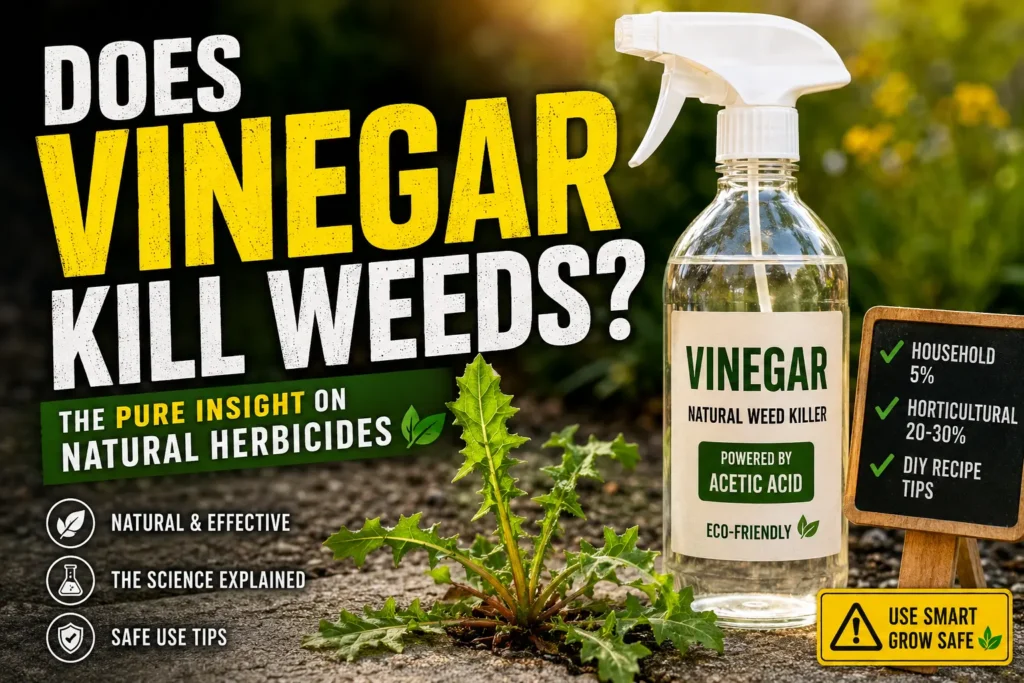
Raiding the pantry to solve your garden problems sounds like the ultimate eco-friendly hack. But before you douse your flower beds in white vinegar, you need to understand that vinegar is a non-selective contact herbicide. It doesn’t know the difference between a dandelion and your prize-winning tulips.
So, does vinegar kill weeds? Yes, but it’s a surface-level solution that requires a bit of science to master.
The Science: How Acetic Acid Works
The active ingredient in vinegar is acetic acid. When sprayed on a plant, it dissolves the waxy coating (cuticle) on the leaves. This causes the plant to lose moisture rapidly and dehydrate.
- Household Vinegar (5%): Good for young seedlings, but mature weeds will often survive the initial burn.
- Horticultural Vinegar (20–30%): This is industrial strength. It kills weeds on contact within 2 hours, but it is corrosive and can burn your skin or eyes.
The Popular DIY Recipe (And Its Hidden Danger)
Most internet recipes suggest mixing vinegar, dish soap, and salt. While this “cocktail” is effective, it comes with a major caveat for your soil.
- The Soap: Acts as a surfactant, helping the vinegar stick to the leaves.
- The Salt: This is the real killer. Salt (sodium chloride) “salts the earth.” It remains in the soil long after the vinegar has evaporated, preventing anything from growing there again for months or even years.
Pure Insight: Never use the vinegar-and-salt mix in your garden beds. Save it exclusively for sidewalk cracks or gravel driveways where you want the ground to stay bare.
3 Rules for Effective Application
- Sunlight is Mandatory: Vinegar works best in high heat. Apply it on a warm, sunny day with no wind. The sun acts as a catalyst, drying out the weed tissue almost instantly.
- Target the Foliage: Because vinegar is a “contact” killer, it doesn’t travel to the roots like Roundup does. You must soak the leaves completely. If the weed is a perennial (like a mature dandelion), you may need 2–3 applications to finally starve the root system.
- Safety First: If you use the 20% horticultural grade, wear gloves and goggles. It is an acid, not a salad dressing!
Official Disclaimer
Safety Disclaimer: The information on PureInsights.blog is for educational purposes. Horticultural vinegar (20% concentration or higher) is a corrosive acid that can cause severe burns and permanent eye damage. Always wear protective gear (gloves, goggles, long sleeves) when handling industrial-grade acids.
Medical Notice: While vinegar is a natural product, it is not a “remedy.” If you have sensitive skin or respiratory issues, avoid inhaling the fumes. As always, if you are managing health conditions like kidney disease, be mindful of any strong chemicals (natural or synthetic) in your environment.
Environmental Disclaimer: Vinegar can alter soil pH and kill beneficial soil microbes. Use sparingly and avoid runoff into local waterways.
(FAQs)
1. Will vinegar kill my grass?
Yes. Vinegar is non-selective. If you spray it on your lawn, it will leave brown, dead spots. For lawn weeds, it is better to hand-pull or use a selective herbicide.
2. Is vinegar safer than Roundup (Glyphosate)?
Vinegar breaks down in the soil within 1–10 days, making it much better for the environment. However, at high concentrations (20%+), it is more immediately dangerous to the person applying it than diluted glyphosate.
3. Why do my weeds keep coming back?
Vinegar only kills what it touches. If the weed has a deep taproot, the plant will simply use its stored energy to grow new leaves. Consistent re-application is key to “starving” the root.
4. Can I use vinegar near my edible garden?
Yes, household vinegar is safe near edibles but be careful not to lower the soil’s pH too much. If you’re managing a wellness-focused garden—perhaps one where you’re learning how to make CBD oil—ensure no acetic acid drifts onto your hemp plants, as it will stunt their growth.

