
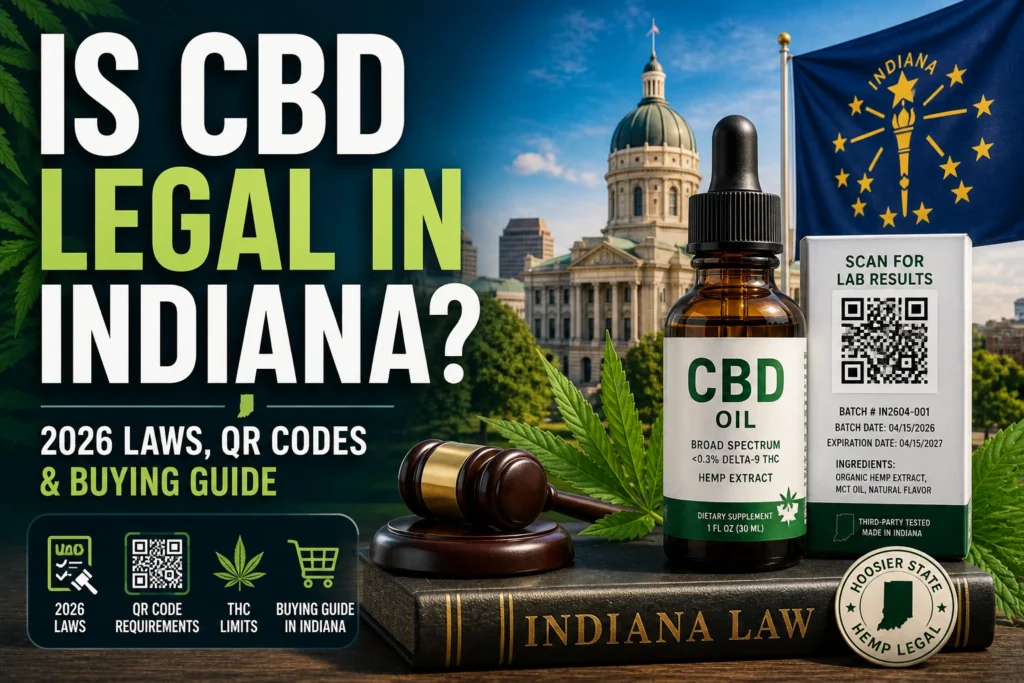
If you live in the “Hoosier State,” you know that Indiana’s relationship with the cannabis plant is unique. While neighboring states like Illinois and Michigan have fully legalized recreational marijuana, Indiana remains strict. This leaves many residents asking: Is CBD legal in Indiana?
As of 2026, the answer is a resounding yes—but with some of the most rigorous labeling and testing requirements in the nation. To stay on the right side of the law, you need more than just a bottle of oil; you need a “Pure Insight” into Indiana’s specific regulations.
The Legal Standard: Hemp vs. Marijuana
In Indiana, the legality of a product hinges entirely on its source and its THC content. Under Senate Bill 52 and subsequent updates through 2026:
- The 0.3% Rule: CBD must be derived from industrial hemp and contain no more than 0.3% Delta-9 THC by dry weight.
- Smokable Hemp: While CBD oils and gummies are legal, the retail sale of smokable hemp flower remains prohibited in Indiana.
- 2026 Legislative Updates: Be aware of Senate Bill 250 (2026), which has introduced stricter caps on “Total THC” (including Delta-8 and other variants) to align with evolving federal standards.
The “QR Code” Law: What to Look for on the Label
Indiana was a pioneer in requiring transparency for CBD products. If you are buying CBD in a store in Indianapolis, Fort Wayne, or online, the packaging must include:
- A Scannable QR Code or Barcode: This must link directly to a Certificate of Analysis (COA).
- Batch Information: The label must show the batch identification number, batch date, and expiration date.
- Ingredient List: A full breakdown of what is inside the bottle.
Pro Tip: If you pick up a bottle in an Indiana shop and it doesn’t have a QR code, it is technically illegal for that retailer to sell it, and you should avoid it for your own safety.
Safety and Quality Control
Why is Indiana so strict about labeling? It’s about consumer protection. A COA verifies that your product is free from heavy metals, pesticides, and residual solvents.
For those with specific health concerns, such as can you take CBD gummies with kidney disease, these lab reports are vital for ensuring no harmful contaminants are present. Furthermore, if you are worried about drug testing or surgical prep, understanding how long does CBD stay in your system is only useful if you know exactly how much THC is in your product—information found only on a legal, Indiana-compliant label.
Can You Make Your Own CBD in Indiana?
While you can buy and possess CBD, home production of CBD extract (extraction from the plant) is generally illegal for individuals without a state-issued hemp processor license.
However, many enthusiasts buy legal, compliant oil to create their own edibles. If you want to customize your experience, learning how do you make CBD gummies at home using store-bought, lab-tested oil is a great way to control your ingredients while staying compliant. Just remember to store your CBD oil properly to maintain its legality and potency, as degraded oil can sometimes show altered chemical profiles.
Conclusion
So, is CBD legal in Indiana? Yes, but Indiana demands transparency. By only purchasing products with clear QR codes and batch-specific lab reports, you can enjoy the benefits of CBD with total peace of mind.
Disclaimer: Laws are subject to change. This article reflects Indiana law as of April 2026. Always consult with a legal professional for specific advice regarding hemp and cannabis regulations.
FAQs
Q1: Can I be arrested for having CBD oil in Indiana?
Ans: Not if it meets the state requirements (≤0.3% THC and proper labeling). However, if the product lacks a QR code or lab results, law enforcement may have grounds for further investigation.
Q2: Is Delta-8 THC legal in Indiana?
Ans: As of early 2026, Delta-8 exists in a “gray area.” While technically hemp-derived, new bills like SB 250 are moving toward banning or strictly limiting “intoxicating” hemp derivatives. Always check the latest monthly updates.
Q3: Can my employer fire me for using legal CBD in Indiana?
Ans: Yes. Indiana is an “at-will” employment state, and employers can have zero-tolerance policies for THC, regardless of whether it came from legal hemp or marijuana

