
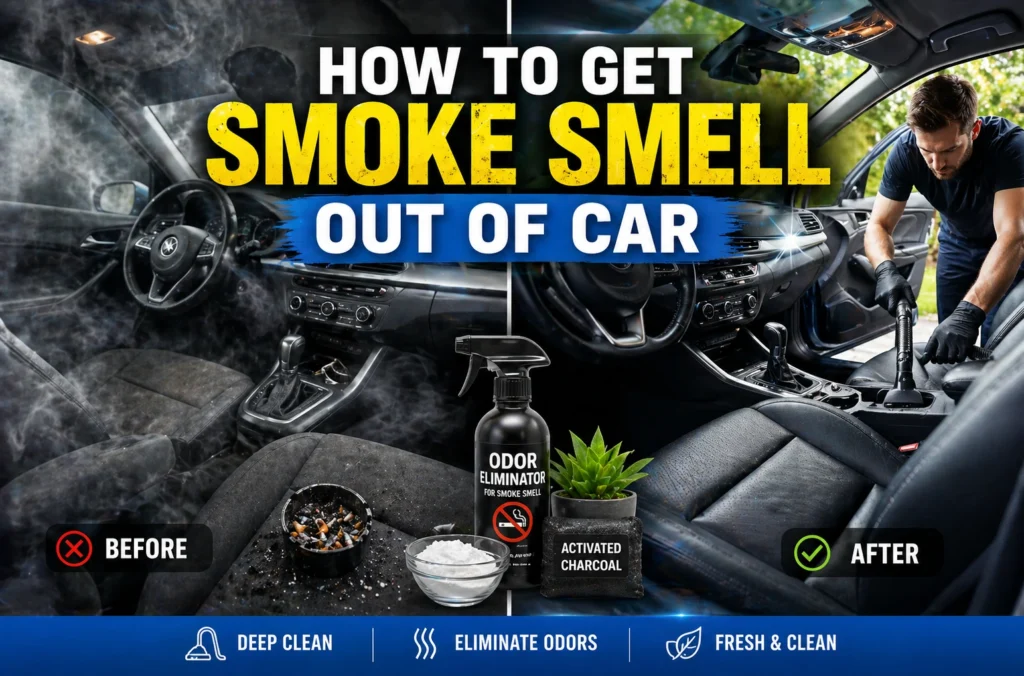
Few things ruin the driving experience faster than a stubborn smoke odor. Whether you bought a used vehicle from a smoker or you’re trying to freshen up your own ride, learning how to get smoke smell out of car interiors can make a huge difference.
Smoke particles cling to seats, carpets, vents, and headliners. That’s why simply spraying air freshener rarely solves the problem. To truly eliminate the odor, you need to remove the source—not just cover it up.
In this guide, you’ll learn how to get smoke smell out of car cabins effectively using DIY methods, deep-cleaning strategies, and professional-level solutions.
Why Smoke Smell Sticks in Your Car
Smoke odor is difficult to remove because cigarette smoke contains tar and microscopic particles that settle into nearly every surface.
Common odor traps include:
- Cloth seats
- Carpet fibers
- Floor mats
- Air vents
- Headliner fabric
- Cabin air filter
If smoke has been present for months or years, the smell may be deeply embedded.
How to Get Smoke Smell Out of Car: Start With a Full Interior Clean
Before using odor removers, deep cleaning is essential.
Step 1: Remove Trash and Ash
Start by clearing out:
- Cigarette butts
- Ashtray residue
- Burned packaging
- Floor debris
Even small remnants can continue producing odor.
Step 2: Vacuum Everything
Vacuum:
- Seats
- Carpets
- Under seats
- Trunk
- Floor mats
Use crevice tools for tight spaces.
For deeper upholstery care, How to Clean Cloth Car Seats can help restore fabric surfaces more effectively.
Clean Hard Surfaces Thoroughly
Smoke residue leaves an invisible film on dashboards, windows, and plastic trim.
Best cleaning solution:
- White vinegar + water
or - Automotive interior cleaner
Wipe down:
- Dashboard
- Steering wheel
- Door panels
- Cup holders
- Windows (inside especially)
Pro Tip:
Nicotine film often builds heavily on glass, so clean windows twice.
Use Baking Soda to Absorb Smoke Odor
Baking soda is one of the most affordable ways to remove lingering smells.
How to use:
- Sprinkle baking soda generously on seats and carpets
- Let sit for 8–12 hours
- Vacuum thoroughly
Why it works:
Baking soda neutralizes odors instead of masking them.
This method works especially well for mild to moderate smoke smells.
Shampoo Seats and Carpets
If basic cleaning isn’t enough, shampooing is often the breakthrough step.
You can use:
- Carpet extractor
- Upholstery cleaner
- Steam cleaner
Focus on:
- Seat cushions
- Carpet padding
- Floor mats
- Fabric door inserts
Smoke often penetrates beneath visible surfaces, so deep extraction matters.
Don’t Forget the Headliner
Many people overlook the ceiling fabric, but it absorbs smoke heavily.
Important:
Avoid soaking it. Use a microfiber cloth with light upholstery cleaner and gently blot.
Too much moisture can loosen adhesive.
Replace the Cabin Air Filter
This is one of the most overlooked solutions when learning how to get smoke smell out of car interiors.
Why it matters:
Your cabin filter traps smoke particles and recirculates odors every time you run the AC.
Solution:
Replace the cabin air filter and consider using an activated charcoal version for better odor control.
Clean the Air Vents
Smoke can settle inside HVAC systems.
Quick method:
- Spray odor-neutralizing cleaner into exterior air intake
- Run fan on high
- Switch between fresh air and recirculation modes
This helps flush odor from the ventilation system.
Use Activated Charcoal or Odor Absorbers
After cleaning, passive odor absorbers can help.
Popular options:
- Activated charcoal bags
- Coffee grounds
- Baking soda boxes
- Commercial odor absorbers
Place them under seats for several days.
Ozone Treatment: The Heavy-Duty Solution
If smoke smell is severe, ozone treatment may be the most effective answer.
How it works:
Ozone machines neutralize odor molecules at a chemical level.
Best for:
- Heavy smoker cars
- Used car restoration
- Fire or cigar smell
Warning:
Ozone should only be used carefully and according to safety instructions.
Professional detailers often use this for stubborn odors.
Common Mistakes to Avoid
Don’t:
- Only use air fresheners
- Ignore vents or filters
- Skip deep cleaning
- Over-wet the headliner
- Assume one treatment is enough
Smoke removal often requires multiple steps.
Prevent Smoke Smell From Returning
Once your car smells fresh again:
Do this:
- Ban smoking inside
- Replace cabin filters regularly
- Vacuum monthly
- Use seat covers
- Keep charcoal odor absorbers in the vehicle
Long-term prevention is easier than repeated restoration.
DIY vs Professional Detailing
DIY:
- Budget-friendly
- Effective for mild odors
- Time-intensive
Professional:
- Faster
- Better for severe odors
- More expensive
If you’re preparing a vehicle for resale, professional detailing can also improve value—similar to advice in How to Fix Scratches on Car.
FAQs About How to Get Smoke Smell Out of Car
How long does it take to remove smoke smell from a car?
Light odors may improve in a day, while severe smells can take several deep-clean sessions.
Does vinegar remove smoke smell from cars?
Yes, vinegar helps neutralize odors and clean smoke residue.
Is ozone treatment safe?
Yes, when used correctly and with proper precautions.
Can smoke smell permanently damage car value?
Yes, strong smoke odor can reduce resale value significantly.
Final Thoughts: How to Get Smoke Smell Out of Car Successfully
Learning how to get smoke smell out of car interiors is all about removing smoke particles from every surface—not hiding them.
For best results:
- Deep clean
- Vacuum thoroughly
- Use baking soda or charcoal
- Replace filters
- Consider ozone if necessary
With patience and the right strategy, even heavily smoked-in vehicles can smell fresh again.
A clean-smelling car isn’t just more enjoyable—it can also improve resale value, comfort, and overall driving satisfaction.

