

Learning how to become an auto transport broker can open the door to a profitable logistics business with low startup costs.
The auto transport industry has grown rapidly in recent years. More people now buy vehicles online, relocate across states, and use professional car shipping services than ever before. Because of this demand, many entrepreneurs are searching for how to become an auto transport broker and build a profitable logistics business.
The good news is that you do not need to own expensive trucks or trailers to enter the industry. Instead, an auto transport broker connects customers with licensed vehicle carriers and manages the shipping process from start to finish.
This business model has relatively low startup costs, flexible working options, and strong long-term growth potential. However, success requires more than simply getting licensed. You also need carrier relationships, operational systems, customer service skills, and smart marketing.
In this guide, you will learn:
- What an auto transport broker does
- Legal requirements and licensing
- Startup costs
- How brokers make money
- Common beginner mistakes
- Expert growth strategies competitors often miss
What Is an Auto Transport Broker?
An auto transport broker is a middleman between customers and vehicle transport carriers.
Instead of transporting cars personally, brokers arrange shipments using a network of licensed carriers. They handle communication, scheduling, paperwork, pricing, and customer support.
Main responsibilities include:
- Finding customers who need vehicle shipping
- Negotiating rates with carriers
- Scheduling pickups and deliveries
- Tracking shipments
- Managing transportation documents
- Resolving delivery issues
For example, a customer may pay $1,300 to ship a vehicle across the country. The broker finds a carrier willing to complete the shipment for $1,000 and keeps the remaining margin as profit.
This is why many entrepreneurs choose brokerage over owning transport trucks.
Why the Auto Transport Industry Is Growing
Many competitor articles explain licensing but fail to discuss why this industry continues expanding.
Several trends are increasing vehicle shipping demand:
- Online car purchases
- Interstate relocation
- Military moves
- Seasonal snowbird travel
- College student relocations
- Luxury vehicle transportation
- Electric vehicle shipping
The rise of platforms like Carvana and online dealerships has also increased nationwide shipping demand.
As a result, experienced brokers who provide fast communication and reliable service can build highly profitable businesses.
How Much Does It Cost to Ship a Car to Hawaii
How to Become an Auto Transport Broker
Choose a Business Structure
Before applying for broker authority, you should legally register your business.
Most brokers choose:
- LLC
- Sole Proprietorship
- S Corporation
An LLC is usually the preferred option because it protects personal assets from business liabilities.
You should also:
- Register your business name
- Apply for an EIN
- Open a business bank account
- Set up accounting software
Separating personal and business finances makes taxes and bookkeeping much easier.
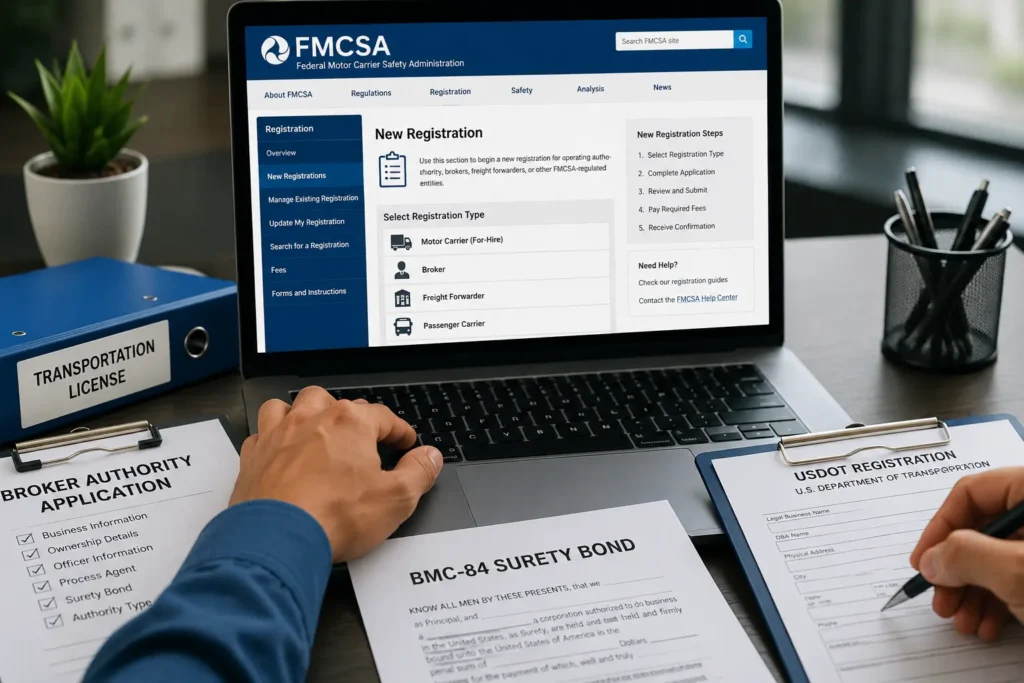
Apply for FMCSA Broker Authority
To legally operate as an auto transport broker in the United States, you must obtain broker authority through the Federal Motor Carrier Safety Administration (FMCSA).
You will typically need:
- MC Number
- Broker authority approval
- Business registration
Basic FMCSA application steps:
- Submit the OP-1 application
- Pay the application fee
- Register your business entity
- Complete required filings
- Wait for approval processing
Many beginners underestimate approval timelines. In some cases, the process can take several weeks.
Obtain a BMC-84 Surety Bond
One of the biggest legal requirements is obtaining a BMC-84 surety bond.
Federal regulations currently require brokers to maintain a $75,000 surety bond. However, you do not pay the full amount upfront.
Most new brokers pay:
- Around $900–$5,000 annually
- Based on credit history and financial strength
Strong credit usually lowers bond premiums significantly.
This is one area many competitor articles fail to explain clearly.
Get Business Insurance
Although carriers handle the physical transportation, brokers still need insurance protection.
Recommended policies include:
- General liability insurance
- Errors and omissions insurance
- Cyber liability coverage
Insurance helps protect your business from disputes, fraud, and operational mistakes.
Build a Reliable Carrier Network
Your carrier relationships are one of the most important parts of the business.
Successful brokers focus on:
- Reliable communication
- Verified insurance
- Carrier safety records
- On-time delivery performance
Before working with any carrier:
- Verify FMCSA authority
- Review insurance validity
- Check customer complaints
- Confirm safety ratings
Experienced brokers know that dependable carriers matter more than simply choosing the cheapest option.
Learn Dispatching and Vehicle Logistics
Auto transport brokerage combines sales, logistics, and customer service.
You should understand:
- Open vs enclosed transport
- Seasonal pricing changes
- Vehicle dimensions
- Route planning
- Dispatch communication
- Delivery timelines
For example:
- Enclosed transport costs more but protects luxury vehicles
- Rural deliveries often increase pricing
- Snowbird season raises shipping demand
These details help brokers quote accurate prices and maintain profitability.
How Much Does It Cost to Start an Auto Transport Brokerage?
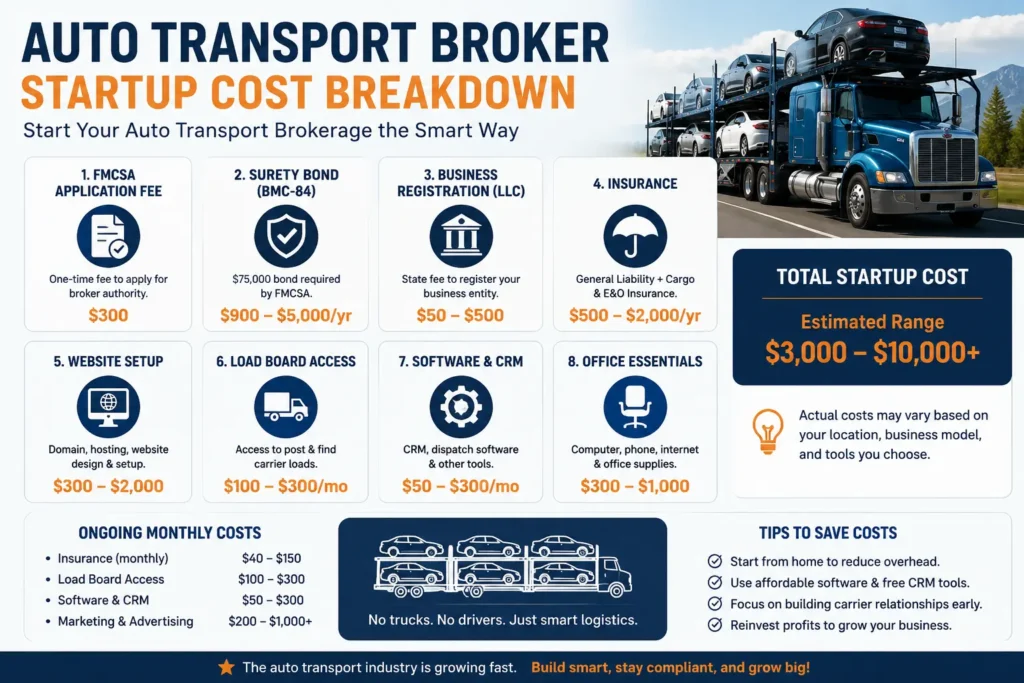
Startup costs vary depending on software, insurance, marketing, and licensing.
Here is a realistic cost breakdown:
| Expense | Estimated Cost |
|---|---|
| FMCSA Application | $300 |
| Surety Bond | $900–$5,000/year |
| LLC Registration | $50–$500 |
| Insurance | $500–$2,000/year |
| Website Setup | $300–$2,000 |
| Load Boards | $100–$300/month |
| CRM & Software | $50–$300/month |
Most beginners can realistically start with $3,000–$10,000.
You do not need an office initially. Many successful brokers start from home.
Best Software for Auto Transport Brokers
Technology can dramatically improve efficiency and customer experience.
Useful tools include:
- CRM systems
- Dispatch software
- Carrier verification tools
- Quote calculators
- Load boards
- Shipment tracking systems
Good software helps brokers:
- Respond faster
- Track deliveries
- Organize leads
- Improve customer communication
- Analyze profits
Competitor articles often mention software briefly, but scaling becomes difficult without automation.
How Auto Transport Brokers Find Customers
Many new brokers fail because they focus only on licensing instead of lead generation.
Customer acquisition is critical.
Effective marketing methods include:
- SEO blogs
- Google Business Profile
- Facebook advertising
- Dealership partnerships
- Moving company referrals
- Social media marketing
- Online vehicle marketplaces
Content marketing is especially powerful because educational articles can generate traffic for years.
Common Mistakes New Auto Transport Brokers Make
Beginners often lose money because they underestimate the operational side of the business.
Choosing the cheapest carriers
Cheap carriers may create delays, poor communication, or customer complaints.
Ignoring contracts
Clear broker-carrier agreements reduce disputes and legal risks.
Underpricing shipments
Low pricing can quickly destroy profit margins.
Poor communication
Customers expect regular shipment updates.
Not understanding seasonality
Transport pricing changes throughout the year.
Avoiding these mistakes gives new brokers a major competitive advantage.
Broker vs Carrier: What Is the Difference?
This question appears frequently in Google’s People Also Ask results.
| Broker | Carrier |
|---|---|
| Arranges shipments | Physically transports vehicles |
| Does not own trucks | Owns transport equipment |
| Works with multiple carriers | Handles deliveries directly |
| Focuses on logistics and customers | Focuses on transportation |
Many companies operate as both brokers and carriers, but beginners often start as brokers because startup costs are lower.
Is Becoming an Auto Transport Broker Worth It?
For many entrepreneurs, yes.
The business offers:
- Low startup costs
- Remote work flexibility
- High market demand
- Scalable income potential
However, long-term success depends on:
- Customer service
- Carrier relationships
- Marketing
- Organization
- Communication skills
This is not passive income. Strong brokers actively manage operations and customer relationships daily.
Still, experienced brokers can build highly profitable businesses with repeat customers and dealership partnerships.
Expert Tips Most Competitors Ignore
Many top-ranking blogs cover only licensing basics. However, experienced brokers understand that operations and marketing determine long-term profitability.
Focus on repeat customers
Dealerships and relocation companies can provide recurring business.
Build a niche
Luxury cars, military relocation, or enclosed transport niches often have higher margins.
Improve response speed
Fast quote responses increase conversion rates dramatically.
Use SEO content marketing
Educational blogs attract long-term organic traffic.
Track carrier performance
Reliable carriers improve customer satisfaction and reduce complaints.
These strategies separate successful brokers from struggling beginners.
Frequently Asked Questions
Do you need a license to become an auto transport broker?
Yes. You must obtain broker authority through the FMCSA and maintain a surety bond to operate legally.
How much do auto transport brokers make?
Income varies widely. Some brokers earn a few thousand dollars monthly, while established companies generate six-figure annual profits.
Can I become an auto transport broker from home?
Yes. Many brokers successfully operate from home using dispatch software and online load boards.
How long does it take to become an auto transport broker?
The setup process usually takes several weeks depending on FMCSA approval timelines and bonding requirements.
Is the auto transport industry competitive?
Yes, but strong customer service and effective marketing can help smaller brokers compete successfully.
Final Thoughts
Learning how to become an auto transport broker is about far more than getting licensed. The most successful brokers understand logistics, communication, customer service, and marketing.
If you focus on:
- Building strong carrier relationships
- Providing fast customer support
- Using smart SEO strategies
- Managing operations efficiently
you can build a scalable and profitable transportation business without owning trucks.
Many competitor articles stop at licensing requirements. The real growth comes from operational systems, lead generation, and customer trust.
If you understand how to become an auto transport broker properly, you can build a scalable business without owning transport trucks.
That combination is what separates average brokers from long-term successful businesses.

