

Ending a relationship is never easy. If you’re wondering how to end a love story, you’re likely facing one of life’s toughest emotional decisions. While breakups are painful, ending a relationship with honesty, compassion, and respect can help both people heal and move forward.
A thoughtful ending doesn’t erase the memories—it simply allows each person to begin a healthier new chapter.
How to End a Love Story the Right Way
Every relationship is different, but a respectful breakup usually follows the same principles.
1. Be Sure About Your Decision
Before ending the relationship, ask yourself:
- Have I communicated my concerns?
- Can the problems realistically be solved?
- Am I acting out of temporary emotions?
Being certain helps prevent mixed signals later.
2. Choose the Right Time and Place
If possible, have the conversation in a private, calm environment.
Avoid ending an important relationship:
- During an argument
- Through text messages
- On special occasions like birthdays or anniversaries
A respectful setting shows maturity.
3. Speak Honestly but Kindly
You don’t need harsh words to express your feelings.
Instead of blaming your partner, focus on your own perspective.
For example:
“I’ve realized our relationship is no longer making either of us happy, and I believe it’s time for us to move forward separately.”
Honesty combined with empathy often creates healthier closure.
What to Avoid During a Breakup
Learning how to end a love story also means knowing what not to do.
Avoid:
- Playing the blame game
- Giving false hope
- Bringing up old arguments
- Ghosting without explanation
- Involving friends or family unnecessarily
Clear communication is kinder than confusion.
Give Each Other Space
Healing requires distance.
After the breakup:
- Limit unnecessary contact.
- Avoid checking social media constantly.
- Focus on your own emotional recovery.
- Reconnect with supportive friends and family.
Giving space benefits both people.
If you’re learning to rebuild confidence, our guide on How to Love Yourself may help.
Accept That Grief Is Normal
Even when ending the relationship is the right choice, sadness is natural.
You may experience:
- Relief
- Loneliness
- Anger
- Guilt
- Hope
These emotions often come and go. Give yourself permission to heal without rushing the process.
Our article on What Is Unconditional Love? explores how healthy love differs from unhealthy attachment.
Signs It Was the Right Decision
Although every situation is unique, many people notice positive changes over time.
You may find that:
- You feel more emotionally at peace.
- Communication becomes less stressful.
- You rediscover personal goals.
- Your confidence gradually returns.
Ending a relationship isn’t about “winning.” It’s about choosing a healthier future for both people.
If you’re still unsure about your feelings, you may also enjoy How Do You Know You Love Someone?
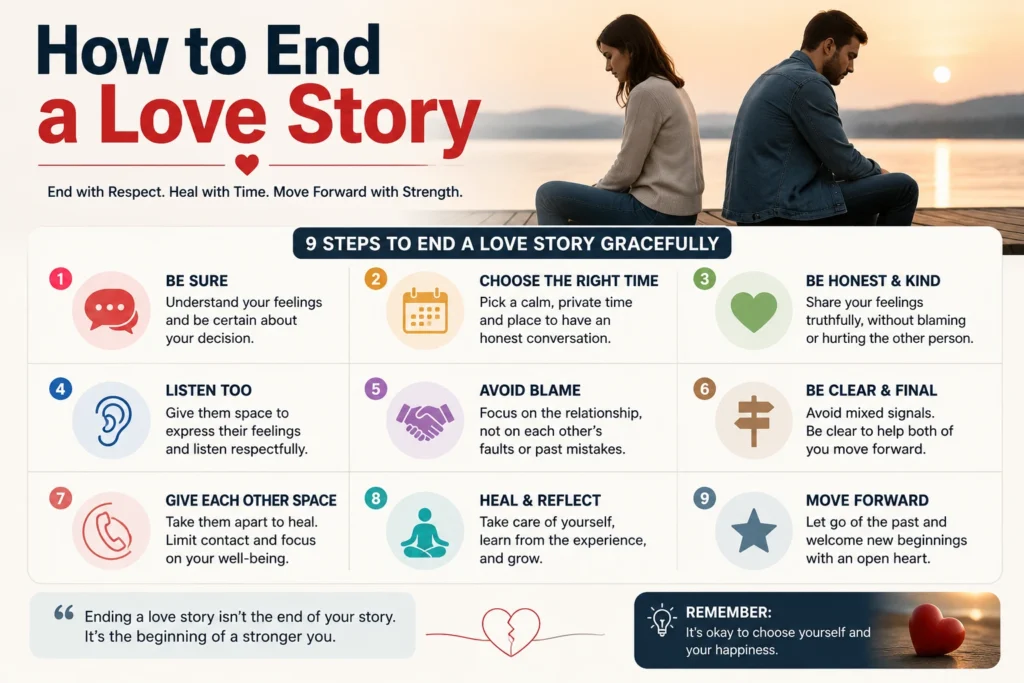
Healthy Ways to Move Forward
After a breakup:
- Start a new hobby.
- Spend time with loved ones.
- Exercise regularly.
- Journal your thoughts.
- Seek professional support if needed.
Healing isn’t about forgetting the past—it’s about learning from it.
For more information :
- American Psychological Association – Healthy Relationships
- Mental Health America – Emotional Wellness Resources
Frequently Asked Questions
How do you end a love story without hurting someone?
You can’t completely avoid pain, but honesty, kindness, and clear communication can reduce unnecessary emotional harm.
Is it better to break up in person?
In most long-term relationships, yes. Face-to-face conversations show respect and allow both people to express their feelings.
How long does it take to heal after a breakup?
Healing varies for everyone. Some people recover within weeks, while others need several months.
Can ex-partners become friends?
Sometimes, but it’s usually healthiest to allow time and emotional distance before attempting a friendship.
Conclusion
Knowing how to end a love story isn’t about finding the perfect words—it’s about treating another person with dignity while staying true to yourself. Honest conversations, healthy boundaries, and patience with the healing process can help both people move forward. Although endings are painful, they can also create space for personal growth, stronger relationships, and a happier future.

