
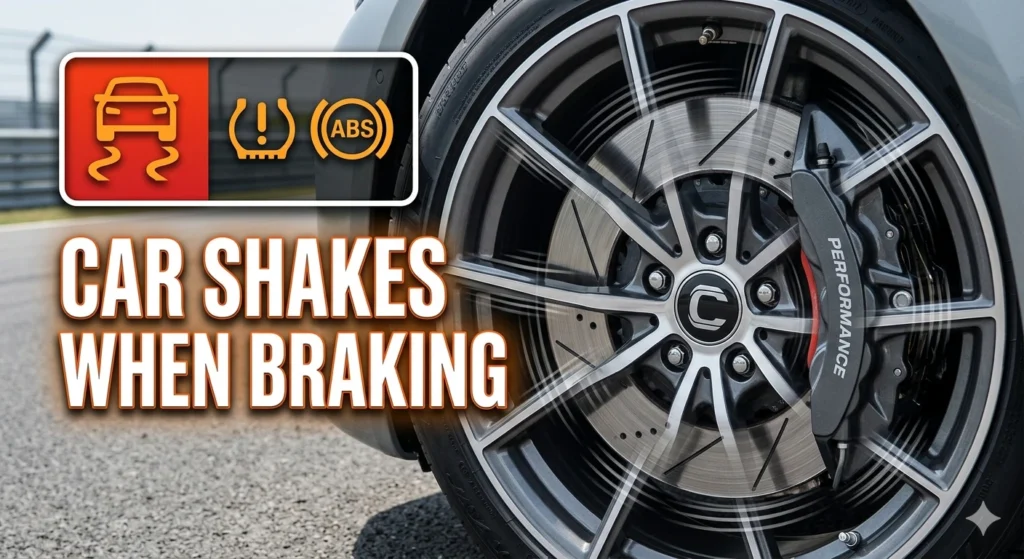
Have you ever pressed the brake pedal and felt your car vibrate or shake? It’s not just annoying—it could be a sign of a serious issue. Many drivers ask, why does my car shake when I brake, especially when the problem seems to appear suddenly.
The truth is, shaking during braking is often a warning signal from your vehicle. Ignoring it can lead to more expensive repairs—or worse, safety risks.
In this guide, we’ll break down the most common causes, how to fix them, and when you should take immediate action.
Why Does My Car Shake When I Brake? (Top Causes)
There isn’t just one answer to why does my car shake when I brake. Several components can cause this issue.
Let’s explore the most common ones.
1. Warped Brake Rotors (Most Common Cause)
Brake rotors are flat discs that your brake pads press against to stop your car.
What happens:
Over time, heat and wear can cause the rotors to become uneven or “warped.”
Signs include:
- Vibrations in the steering wheel
- Pulsation in the brake pedal
- Shaking that gets worse at higher speeds
Fix:
- Resurface or replace the rotors
2. Worn Brake Pads
Brake pads wear down naturally with use.
When they’re worn:
- They create uneven contact with the rotors
- This leads to vibrations during braking
Warning signs:
- Squeaking or grinding noises
- Reduced braking performance
3. Wheel Alignment Issues
Poor alignment can make your car unstable.
When braking:
- Misaligned wheels can cause uneven pressure
- This results in shaking or pulling
4. Suspension Problems
Your suspension system keeps your ride smooth and stable.
If parts are worn:
- Control arms
- Ball joints
- Bushings
They can cause vibrations when you slow down.
5. Tire Issues
Sometimes, the problem isn’t the brakes at all.
Check for:
- Uneven tire wear
- Unbalanced wheels
- Damaged tires
These can amplify vibrations when braking.
6. Sticking Brake Calipers
Brake calipers press the pads against the rotors.
If they stick:
- Uneven braking occurs
- Heat builds up
- Vibrations follow
When Should You Be Concerned?
Not all shaking is equally serious—but some signs shouldn’t be ignored.
Get your car checked immediately if:
- The steering wheel shakes violently
- You hear grinding noises
- Braking feels weak or delayed
- The shaking gets worse over time
Safety should always come first.
How to Fix Car Shaking When Braking
Now that you understand why does my car shake when I brake, let’s look at solutions.
Common fixes include:
- Replace or resurface brake rotors
- Install new brake pads
- Balance and align wheels
- Inspect suspension components
- Replace worn tires
A professional mechanic can diagnose the exact cause quickly.
How Much Does It Cost to Fix?
Costs vary depending on the issue:
- Brake pad replacement: Affordable
- Rotor replacement: Moderate cost
- Suspension repairs: Can be expensive
Fixing the problem early usually saves money.
Preventive Maintenance Tips
Want to avoid asking why does my car shake when I brake in the future?
Follow these tips:
- Inspect brakes regularly
- Avoid aggressive braking
- Rotate tires every 8,000–10,000 km
- Get alignment checks annually
- Replace worn parts promptly
Real-Life Scenario
Imagine driving on a highway and suddenly feeling your steering wheel shake when braking.
At first, it’s mild. You ignore it.
A few weeks later:
- The shaking gets worse
- Braking distance increases
- Repair costs go up
This is why early action matters.
Internal Resources You May Find Helpful
- How Long Does It Take to Charge an Electric Car? 5 Interesting Fast Facts
- 5 Proven Ways of how to Fix Scratches on Car Fast & Easy
- How Do Hybrid Cars Work? 7 Powerful Benefits
External Resources
- Learn more about brake systems from National Highway Traffic Safety Administration (NHTSA)
- Explore maintenance tips at AAA Auto Repair Guide
FAQ Section
Why does my car shake when I brake at high speeds?
This is usually caused by warped brake rotors or unbalanced tires.
Is it safe to drive if my car shakes when braking?
It depends on the severity, but it’s best to get it checked immediately.
Can bad tires cause shaking when braking?
Yes, uneven or damaged tires can contribute to vibrations.
How do I know if my rotors are warped?
You’ll feel pulsation in the brake pedal and vibrations in the steering wheel.
Conclusion
So, why does my car shake when I brake? In most cases, it comes down to worn or uneven brake components—but other factors like tires and suspension can also play a role.
The key is not to ignore the warning signs. What starts as a small vibration can quickly turn into a bigger, more expensive problem.
By understanding the causes and taking action early, you can keep your car running smoothly—and more importantly, stay safe on the road.

